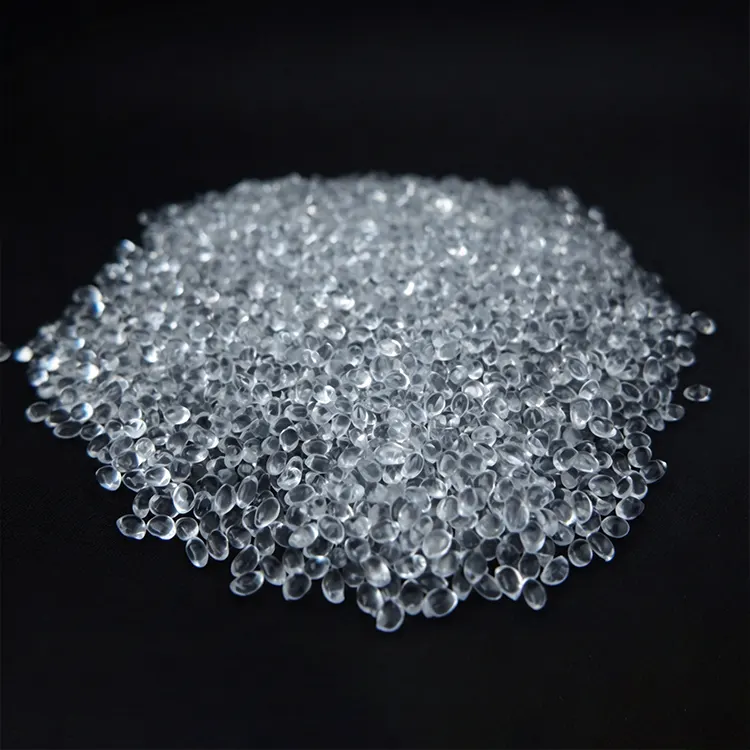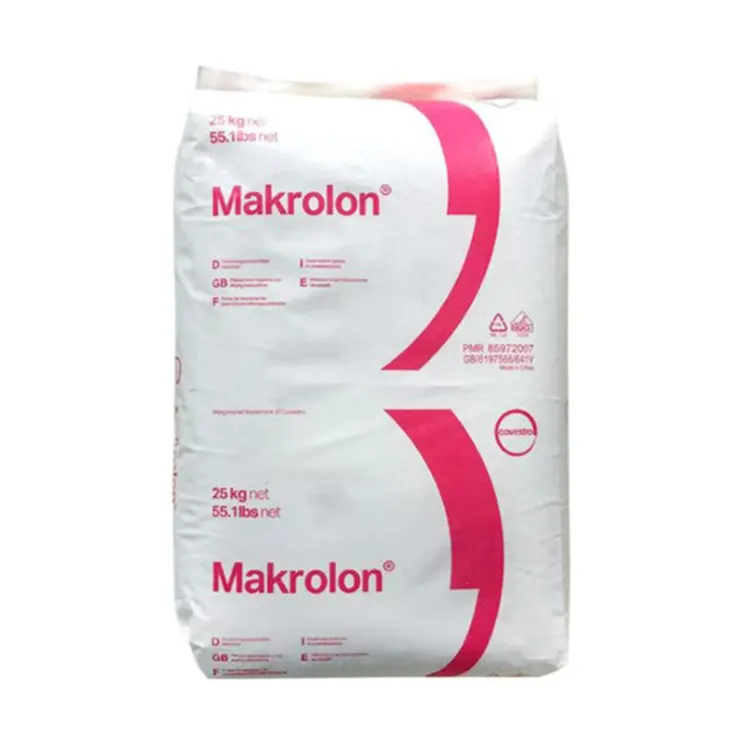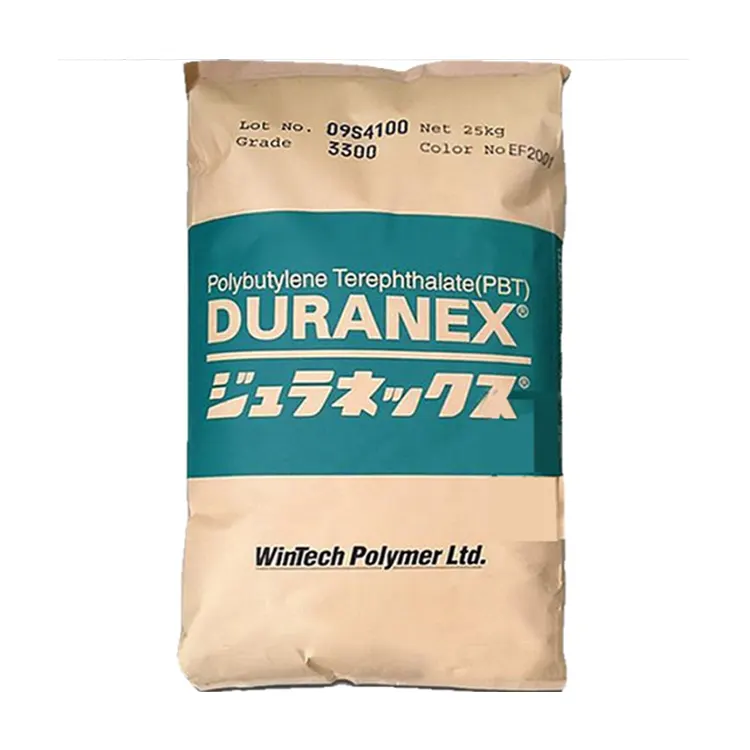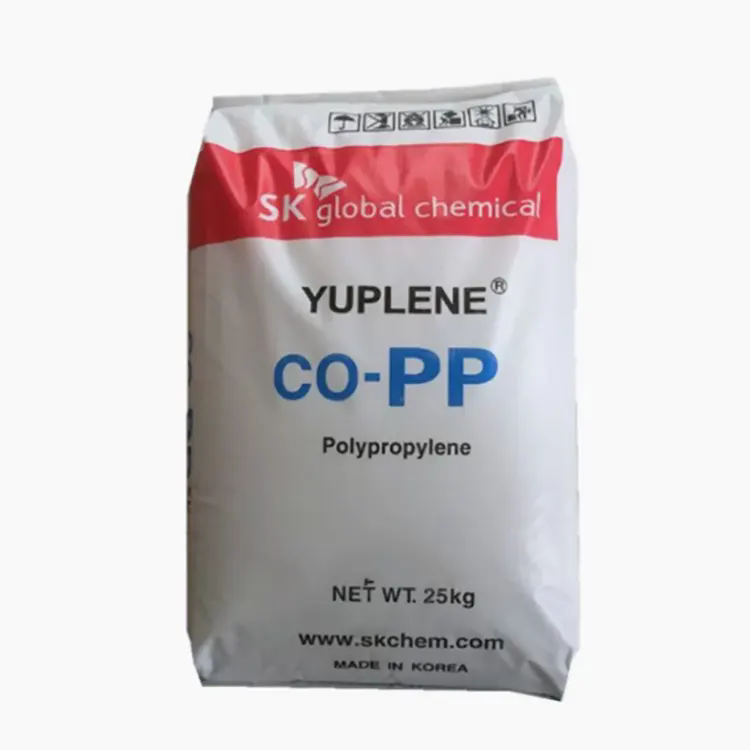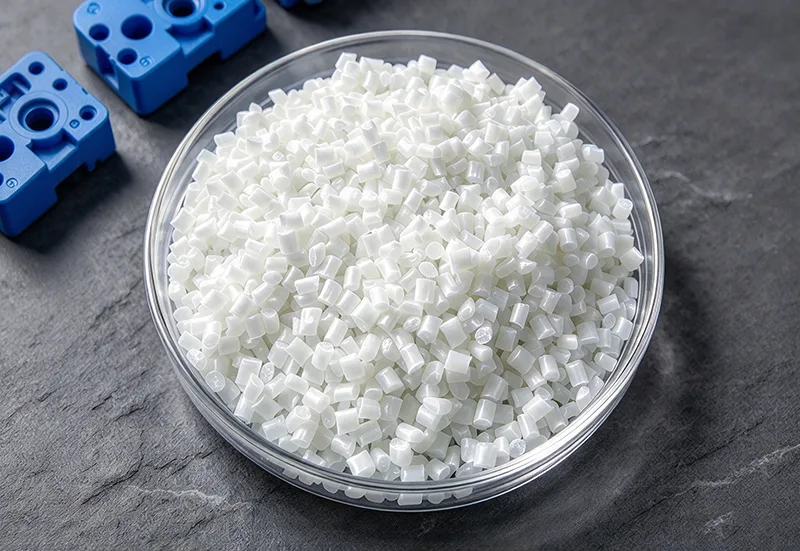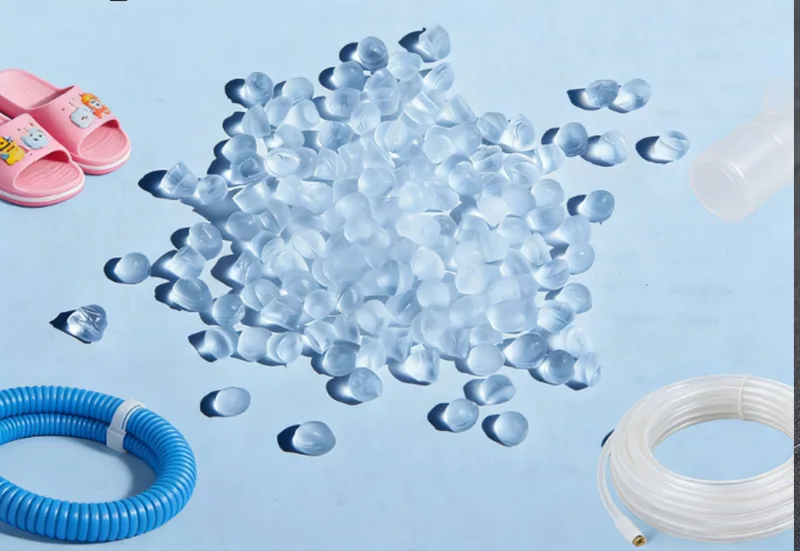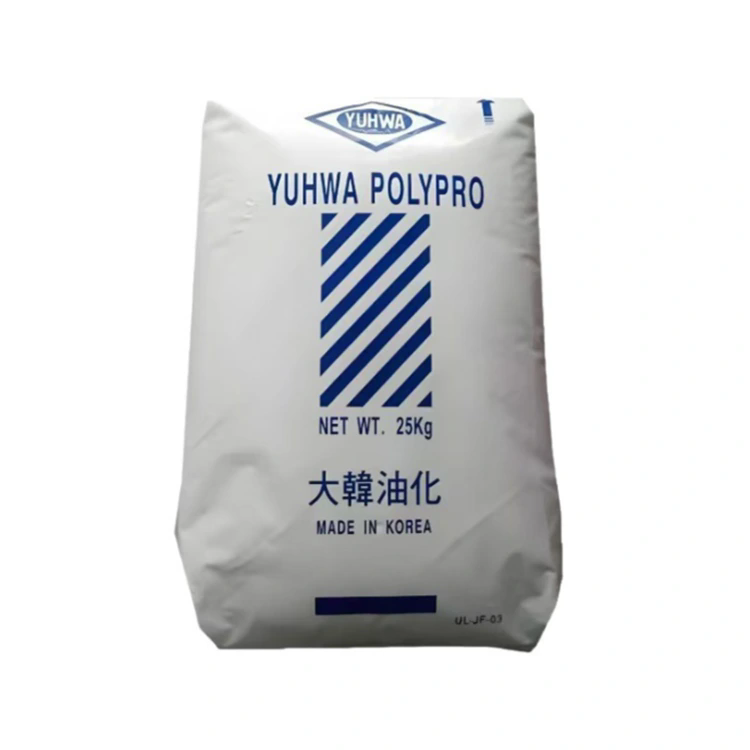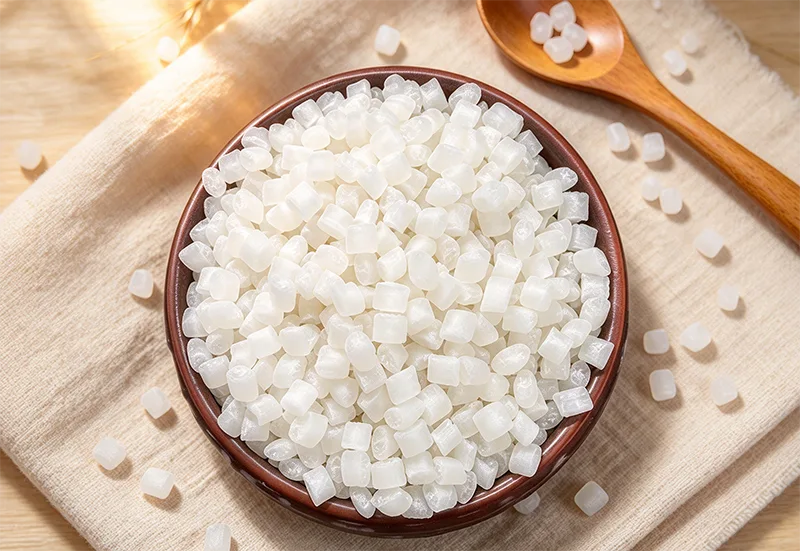
PP Resin, or polypropylene resin, has become one of the most widely used polymers in food packaging because it combines heat resistance, chemical resistance, low density, and good processability at a cost that fits high-volume production. It is used in rigid containers, microwave-safe trays, yogurt cups, bottle caps and closures, thin-wall food tubs, and flexible films for snacks and baked goods. The resin is not a single product. It is a family of grades that differ in melt flow index, comonomer content, stiffness, impact strength, and thermal stability. The grade selection determines whether the packaging can survive hot filling, microwave reheating, freezer storage, or the mechanical loads of a closure system. For a procurement team sourcing PP Resin for food packaging, the grade is the first specification, and the food-contact compliance is the second.
This guide is written for buyers who are evaluating PP Resin for food packaging manufacturing. It explains why PP Resin fits food packaging, how the resin is converted into containers, closures, and films, how to select the right grade, how to verify food-contact compliance and sustainability, and how to reduce sourcing risk. The content is organized around the questions a procurement team should ask, and it includes the product parameters and documentation that a reliable supplier should provide. Our factory at Zhejiang Zhongwang International Trade Co., Ltd. supplies PP Resin to food packaging converters, and the guidance below reflects the technical and procurement considerations we address with our customers.
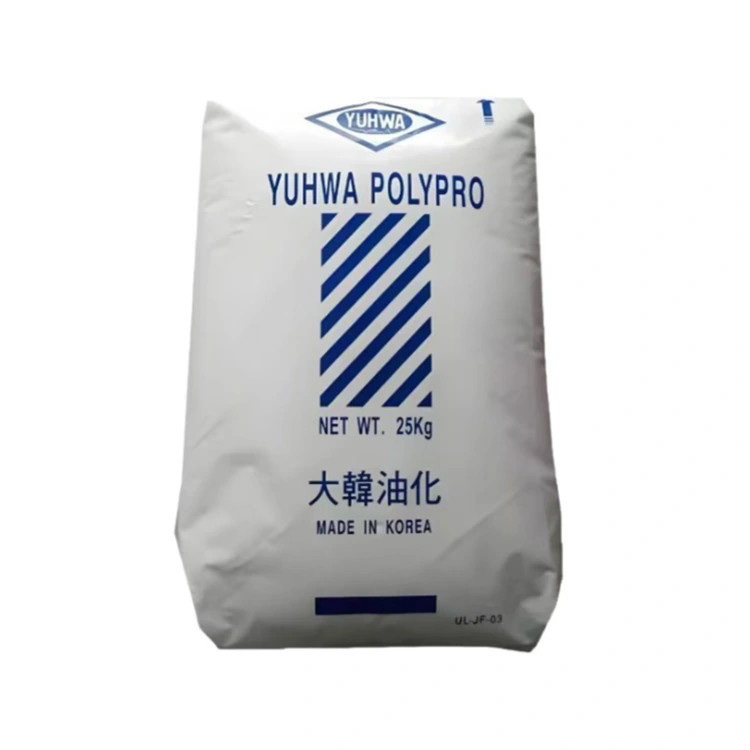
PP Resin fits food packaging because its property profile matches the demands of the category. It has a melting point around 160°C to 170°C, which allows it to withstand hot filling and microwave reheating. It has good chemical resistance, so it does not degrade when it contacts fats, oils, sauces, and acidic foods. It has a low density of about 0.90 g/cm³, which means more parts per kilogram of resin and lower material cost per unit. It has good stiffness and impact balance, which allows thin-wall containers to survive handling and stacking. And it is easy to process by injection molding, thermoforming, blow molding, and film extrusion. The table below compares PP Resin with other common food packaging resins.
| Property | PP Resin | HDPE | PET | PS |
| Density (g/cm³) | 0.90 | 0.95 | 1.35 | 1.05 |
| Heat resistance | Good, microwave-safe grades | Moderate | Good, but limited hot fill | Low |
| Chemical resistance | Excellent to fats and oils | Good | Good | Poor to fats and oils |
| Stiffness | High | Moderate | High | High |
| Impact strength | Moderate to high with copolymer | High | Moderate | Low |
| Typical food packaging use | Containers, caps, films, trays | Bottles, caps | Bottles, trays | Yogurt cups, clamshells |
The fit is not universal. PP Resin has lower oxygen and moisture barrier than PET or EVOH, so it is not the first choice for long-shelf-life oxygen-sensitive foods without a barrier layer or a modified atmosphere package. It also has lower low-temperature impact than some copolymers, so freezer applications require a grade with adequate impact modification. Our factory at Zhejiang Zhongwang International Trade Co., Ltd. helps customers match the PP Resin grade to the food contact condition, the processing method, and the shelf-life requirement. The goal is to avoid a grade that is over-specified for a simple application or under-specified for a demanding one.
For a buyer, the comparison table is a starting point, not a decision. A container that holds a hot, oily sauce needs the chemical resistance and heat resistance of PP Resin. A bottle that holds a carbonated beverage needs the barrier and stiffness of PET. A clamshell that holds a cold salad may use PP Resin or PS, depending on the clarity requirement and the cost target. The procurement team should define the food contact condition and the shelf-life requirement before comparing resins.
PP Resin is converted into food packaging through four main processes: injection molding, thermoforming, blow molding, and film extrusion. Each process uses a different grade and produces a different packaging format. The process selection determines the melt flow requirement, the cooling rate, the orientation, and the final properties. The table below maps the process to the packaging format and the typical PP Resin grade.
| Process | Packaging Format | Typical PP Resin Grade | Key Requirement |
| Injection molding | Thin-wall containers, caps, closures | Homopolymer or impact copolymer, MFI 20-60 g/10 min | High flow, fast cycle, dimensional stability |
| Thermoforming | Trays, cups, lids | Homopolymer or random copolymer sheet grade | Sheet stiffness, sag resistance, draw ratio |
| Blow molding | Bottles, jars | Random copolymer or impact copolymer | Melt strength, parison stability, clarity |
| Film extrusion | Snack films, wrappers, laminates | Random copolymer or terpolymer, film grade | Sealability, optics, tensile strength |
The injection molding process is the most common for rigid food packaging. The PP Resin is melted and injected into a mold at high pressure. The mold is cooled, and the part is ejected. The cycle time depends on the wall thickness, the melt temperature, and the cooling efficiency. Thin-wall containers require a high-flow grade so that the mold fills before the resin freezes. Caps and closures require a grade with good dimensional stability and a controlled shrinkage so that the thread and the seal engage correctly. Our team at Zhejiang Zhongwang International Trade Co., Ltd. works with converters to confirm the melt flow index and the additive package for the specific mold and cycle time.
Thermoforming is used for trays, cups, and lids. The PP Resin is extruded into a sheet, and the sheet is heated and drawn over a mold by vacuum or pressure. The sheet grade must have enough stiffness to resist sagging during heating and enough drawability to form the corners without thinning excessively. Random copolymer grades are often used when clarity and toughness are required. Blow molding is used for bottles and jars. The PP Resin is extruded into a parison, and the parison is inflated inside a mold. The grade must have enough melt strength to hold the parison without sagging. Film extrusion is used for flexible packaging. The PP Resin is extruded through a die and cooled on a chill roll or in a water bath. The film grade must have good sealability and optics, and it may be coextruded with barrier layers. The choice of process and grade is a joint decision between the converter and the resin supplier, and the buyer should confirm that the grade is approved for the process and the food contact condition.
The grade selection criteria for PP Resin in food packaging fall into five groups: the melt flow index, the comonomer type, the stiffness and impact balance, the thermal stability, and the food-contact compliance. The melt flow index determines the processability. A high MFI flows easily and fills thin walls, but it has lower melt strength and may be less suitable for blow molding or sheet extrusion. A low MFI has higher melt strength but requires more injection pressure. The comonomer type determines the properties. Homopolymer PP is stiff and heat-resistant but brittle at low temperature. Random copolymer PP has better clarity and toughness but a lower melting point. Impact copolymer PP has improved low-temperature impact but lower stiffness and clarity. The table below provides a grade selection guide for common food packaging applications.
| Application | Recommended Grade | Typical MFI | Key Property | Procurement Check |
| Microwave food container | Homopolymer or impact copolymer | 10-30 g/10 min | Heat resistance, stiffness | Confirm microwave suitability and food-contact compliance |
| Yogurt cup | Random copolymer | 15-40 g/10 min | Clarity, toughness, sealability | Confirm organoleptic neutrality |
| Bottle cap and closure | Homopolymer or impact copolymer | 20-60 g/10 min | Dimensional stability, torque retention | Confirm shrinkage and stress-crack resistance |
| Thermoformed tray | Random copolymer sheet grade | 2-8 g/10 min | Stiffness, drawability | Confirm sheet grade approval |
| Snack film | Random copolymer or terpolymer | 5-12 g/10 min | Sealability, optics | Confirm seal initiation temperature |
The thermal stability is often overlooked. A PP Resin that is stable at the extrusion temperature but degrades at the injection temperature will produce odors, discoloration, and inconsistent parts. The grade should include an antioxidant package that is appropriate for the process temperature and the residence time. For food packaging, the antioxidant package must also be food-contact compliant and must not migrate into the food at levels above the regulatory limit. The buyer should request the additive declaration and the migration test data for the specific grade.
The food-contact compliance is the final and most important criterion. The PP Resin must meet the food-contact regulations of the destination market, such as FDA 21 CFR 177.1520 in the United States, EU 10/2011 in Europe, and the applicable national regulations in other markets. The compliance is grade-specific, not generic. A homopolymer grade from one supplier may be compliant, while a similar grade from another supplier may use an additive that is not listed for food contact. Our factory at Zhejiang Zhongwang International Trade Co., Ltd. provides the food-contact declaration and the migration test data for the PP Resin grades we supply. The goal is to give buyers the documentation they need for their own compliance assessment.
PP Resin meets food-contact safety requirements through the selection of compliant base polymers, compliant additives, and compliant production processes. The base polymer itself is generally recognized as safe for food contact, but the additives used for stabilization, nucleation, antistatic, and slip must also be approved. The production process must prevent contamination from non-food-grade materials, and the packaging must be stored and transported in a way that preserves the food-contact status. The table below summarizes the food-contact requirements and the evidence a buyer should request.
| Requirement | Description | Evidence to Request |
| Base polymer compliance | Polymer meets the food-contact regulation of the destination market | Food-contact declaration |
| Additive compliance | All additives are listed for food contact and within the migration limits | Additive declaration and migration test report |
| Production segregation | Food-grade resin is produced and stored separately from non-food-grade resin | Production segregation statement |
| Traceability | Batch identification and lot traceability | Batch certificate and lot number |
| Organoleptic neutrality | No taste or odor transfer to the food | Organoleptic test report |
The sustainability requirement is evolving. PP Resin is recyclable in the rigid packaging stream, and it is increasingly available in mechanically recycled and chemically recycled grades. The food-contact status of recycled PP Resin depends on the recycling process and the regulatory approval. In Europe, recycled PP for food contact must meet the requirements of EU 2022/1616 and must be produced under an approved process. In the United States, recycled PP for food contact requires a letter of no objection from the FDA for the specific process. The buyer should confirm the recycled content and the regulatory status before specifying a recycled grade. The table below summarizes the sustainability options for PP Resin in food packaging.
| Option | Description | Food-Contact Status | Procurement Note |
| Virgin PP Resin | Standard fossil-based resin | Approved for food contact | Baseline option |
| Mechanically recycled PP | Post-consumer or post-industrial recyclate | Requires approved process and regulatory clearance | Confirm the recycling process and the food-contact approval |
| Chemically recycled PP | Feedstock recycling to virgin-like resin | Depends on the process and the regulatory approval | Request the food-contact declaration |
| Bio-based PP | Resin produced from bio-based feedstock | Same as the equivalent fossil-based grade if the chemistry is identical | Confirm the food-contact compliance and the bio-content |
Our factory at Zhejiang Zhongwang International Trade Co., Ltd. supports customers with the food-contact documentation and the sustainability data for our PP Resin grades. We provide the declaration of compliance, the migration test reports, and the recycled content certificates where applicable. The goal is to make the compliance and sustainability assessment part of the procurement package, not an afterthought.
Procurement checks reduce risk by confirming that the PP Resin grade, the supplier, and the documentation are consistent with the food packaging application. The checklist below provides a structured verification sequence that can be used before the first order and repeated for each new grade or supplier.
The consistency check is often the step that reveals a problem. A PP Resin grade that meets the specification on the first shipment may drift on later shipments if the supplier changes the additive package or the polymerization conditions. The certificate of analysis should be compared to the specification on every batch, and the MFI and the density should be within the stated tolerance. A drift in MFI can change the cycle time and the part dimensions. A drift in density can change the stiffness and the impact balance. The buyer should set a tolerance and a response plan for out-of-specification batches.
Our factory at Zhejiang Zhongwang International Trade Co., Ltd. provides the technical data sheet, the declaration of compliance, the migration test report, and the batch certificate for our PP Resin grades. We also support customer audits and can provide additional documentation on request. The goal is to make the verification process transparent and to give buyers the evidence they need to confirm that the PP Resin meets the food packaging requirements. For a buyer, the verification should be completed before the first production run, not after the packaging has been shipped.
Question 1: What is the difference between homopolymer, random copolymer, and impact copolymer PP Resin?
Answer: Homopolymer PP is made from propylene only. It is stiff, heat-resistant, and cost-effective, but it is brittle at low temperature. Random copolymer PP includes a small amount of ethylene randomly distributed in the chain. It has better clarity and toughness but a lower melting point. Impact copolymer PP includes a dispersed rubber phase that improves low-temperature impact strength, but it has lower stiffness and clarity. The choice depends on the food packaging application and the process.
Question 2: Can PP Resin be used for microwave food packaging?
Answer: Yes, many PP Resin grades are suitable for microwave food packaging because their melting point is above the typical reheating temperature. The grade must be stabilized for the reheating condition and must be food-contact compliant. The buyer should confirm the microwave suitability with the supplier and should check the maximum service temperature of the specific grade. Not all PP Resin grades are intended for microwave use.
Question 3: What food-contact documentation should I request for PP Resin?
Answer: Request the declaration of compliance for the destination market, the migration test report for the intended food contact condition, the additive declaration, and the batch certificate. The declaration should state the regulation, the grade, and the conditions of use. The migration test report should cover the food simulants and the temperature and time conditions that match the application.
Question 4: Is recycled PP Resin allowed for food packaging?
Answer: Recycled PP Resin can be used for food packaging if the recycling process is approved for food contact and the resin meets the applicable regulatory requirements. In Europe, the process must comply with EU 2022/1616. In the United States, the process requires a letter of no objection from the FDA. The buyer should request the food-contact approval for the specific recycled grade and should not assume that recycled content is automatically food-safe.
Question 5: How do I verify the MFI and density of a PP Resin batch?
Answer: Request the certificate of analysis for the batch and compare the MFI and density to the specification. The MFI is typically measured at 230°C with a 2.16 kg load, and the density is measured by the displacement method. If the values are outside the tolerance, request a retest or a replacement batch. The buyer should also compare the values across several batches to detect drift, because a gradual change can affect the process and the part performance before the value exceeds the specification.
PP Resin is used in modern food packaging because its heat resistance, chemical resistance, low density, and processability fit the demands of rigid containers, closures, trays, and flexible films. The grade selection determines the processability and the final properties, and the food-contact compliance determines whether the packaging can be sold in the destination market. For procurement teams, the key checks are the application conditions, the grade specification, the food-contact documentation, the production segregation, and the batch consistency. Our factory at Zhejiang Zhongwang International Trade Co., Ltd. supplies PP Resin to food packaging converters and provides the technical and compliance documentation that buyers need to verify the grade. If you are sourcing PP Resin for a food packaging application, contact our team to discuss the food contact condition, the process, and the compliance requirements for your market.
Contact Zhejiang Zhongwang International Trade Co., Ltd. today to discuss your PP Resin requirements and to request the technical data and food-contact documentation for your food packaging application.