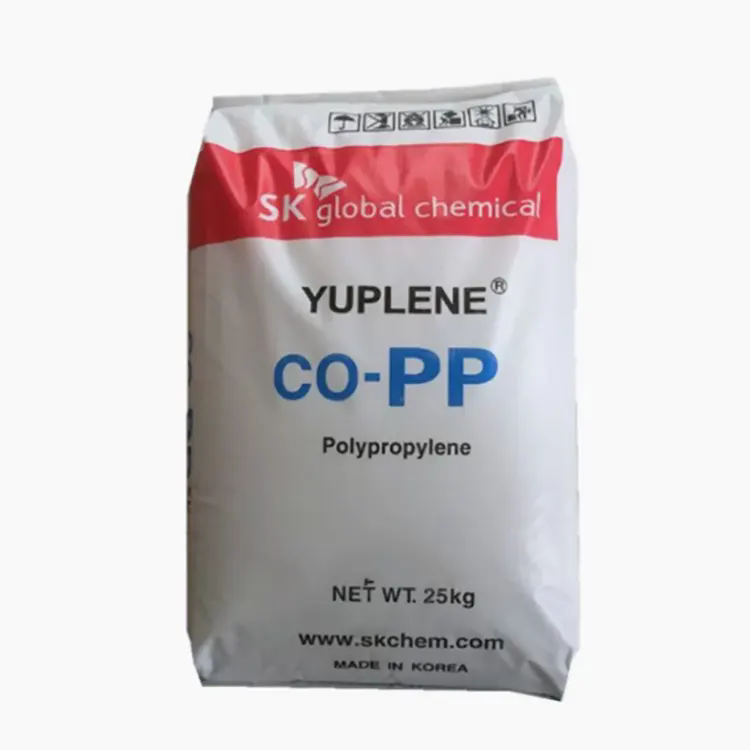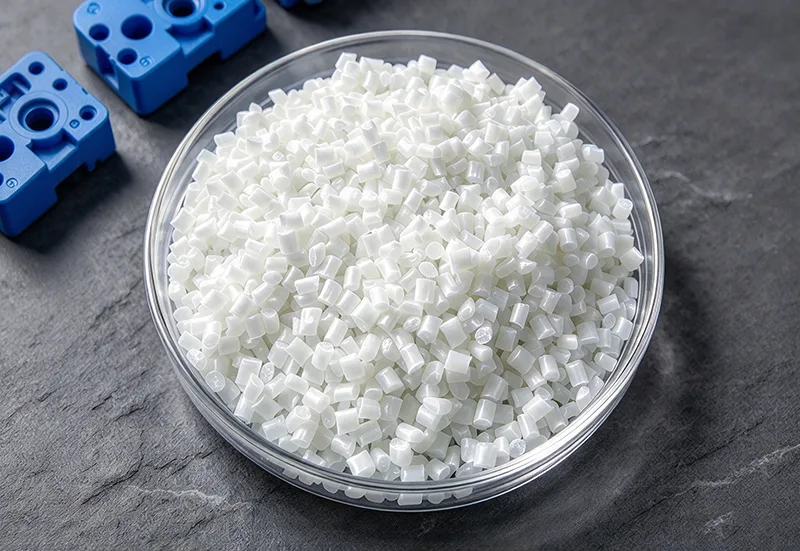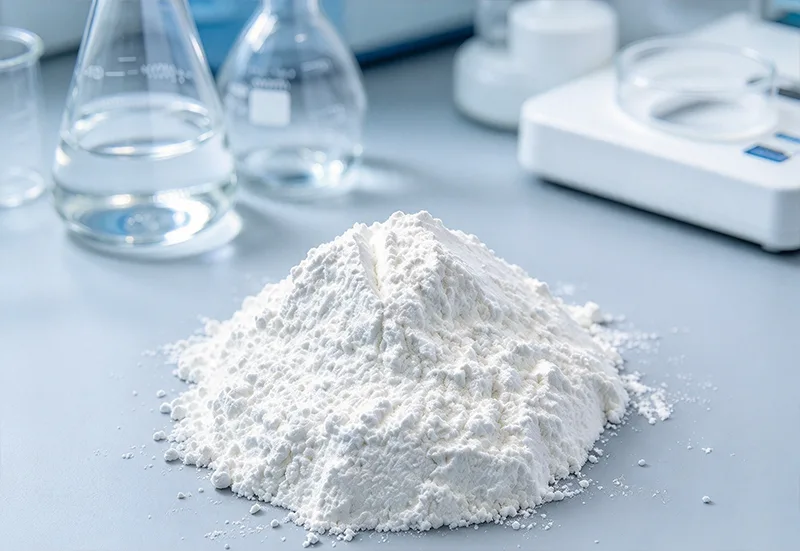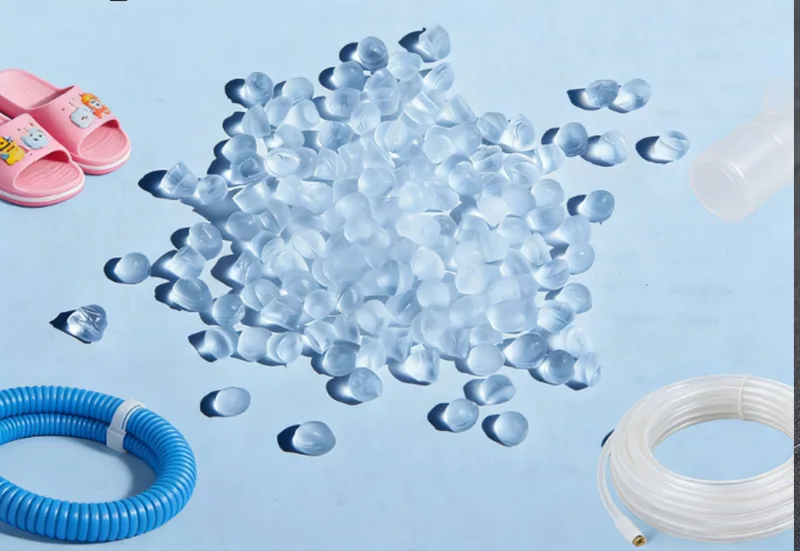
Selecting the right PP Resin grade requires manufacturers to balance processing behaviour, mechanical performance, dimensional stability, appearance and end-use requirements. A material that fills a thin-wall injection mould efficiently may not provide the impact resistance or melt strength needed for a different product. Likewise, a grade suitable for general industrial parts cannot automatically be used for food-contact or medical applications. The correct choice starts with the finished component and its production process, then moves to measurable resin properties and grade-specific documentation.
Zhejiang Zhongwang International Trade Co., Ltd. supplies polypropylene options covering food-grade, medical-grade, industrial-grade and glass-fibre-reinforced categories. Its published food-grade range includes PPH, PPR and PPB types, with a stated density range of 0.90–0.91 g/cm³ and MFR options from 1.5 to 35+ g/10 min. These are portfolio-level references rather than specifications for every grade. Manufacturers should confirm the exact producer, grade number, technical data sheet and compliance documents before approving material for production.
1. How Should the Application and Processing Method Guide Grade Selection?
2. Which Technical Properties Have the Greatest Influence on Finished-Part Performance?
3. What Should Manufacturers Verify Before Purchasing and Approving a PP Grade?
The first step in material selection is to define what the finished part must do. Manufacturers sometimes begin with a familiar resin grade and try to adjust the mould or processing conditions around it. This can work when the application is similar to an existing product, but it can also create unnecessary production compromises. A more reliable approach is to define the component's function, geometry, operating environment and quality requirements before comparing available grades.
Consider three different products: a rigid food container, an automotive interior component and a laboratory consumable. All may use polypropylene, but their priorities are not identical. The container may require suitable food-contact documentation, consistent appearance and reliable mould filling. The automotive part may need stiffness, impact performance, dimensional control and resistance to service temperatures. The laboratory product may require controlled material specifications, repeatable processing and documentation relevant to its intended use. Selecting one grade based only on the general description of polypropylene would overlook these differences.
Before requesting a quotation, manufacturers should establish the following application details:
The processing method is equally important because resin flow and melt strength influence how material behaves inside the equipment. Injection moulding, extrusion, film production and fibre processing do not place identical demands on a polymer. A grade should be selected for the actual process rather than assumed suitable because it belongs to the same resin family.
Injection moulding is commonly used for containers, caps, closures, appliance components and other shaped parts. The resin must fill the cavity, pack effectively and cool into a dimensionally acceptable component. Thin-wall designs and complex flow paths may require a different flow profile from thick-walled parts where impact performance or controlled filling is more important. Mould temperature, gate design, injection speed and cooling conditions also influence the final result.
Extrusion requires attention to continuous melt behaviour and output stability. Film, sheet, profiles and other extruded products may need suitable melt strength, dimensional control and surface quality. A resin that performs well in injection moulding should not automatically be transferred to an extrusion line without checking the manufacturer's processing recommendations. The screw design, die geometry, output rate and cooling arrangement all affect the production window.
Film and fibre processing introduce additional requirements. Film converters may focus on drawability, film strength, clarity, sealing performance and thickness consistency. Fibre producers may need stable spinning behaviour and suitable flow characteristics for the intended filament or nonwoven process. The final grade should be evaluated against the actual line configuration and product specification, not just a generic application label.
Polypropylene homopolymer, random copolymer and impact copolymer also have different performance profiles. Homopolymer grades are often selected where stiffness and heat performance are important. Random copolymers can offer improved clarity and are used in applications where appearance is a priority. Impact copolymers are considered where toughness and impact performance are more important. These are broad material tendencies, not substitutes for comparing the data sheets of specific grades.
The published food-grade portfolio includes PPH, PPR and PPB options. Manufacturers should ask which polymer type is supplied under each grade designation and what properties are documented for the intended application. The designation alone does not establish a complete performance profile. Zhejiang Zhongwang coordinates sourcing through petrochemical supply relationships, including SINOPEC and PetroChina, and grade availability should be confirmed for each enquiry.
Our selection process should also distinguish between a new application and a material replacement. When replacing an existing resin, provide the current manufacturer's name, grade number, technical data sheet and actual production results where available. This gives the supplier a more useful starting point than a request for a grade with a similar MFR. A proposed alternative should be tested in the real mould or production line before a full-scale conversion.
A short trial can reveal issues that a data sheet cannot predict on its own. These may include incomplete filling, excessive flash, sink marks, warpage, surface defects, unstable output or changes in cycle time. Production teams should record the processing conditions and inspect the resulting parts against agreed acceptance criteria. Material selection is complete only when the grade meets both the technical requirements and the practical needs of the manufacturing process.
Once the application and process have been defined, manufacturers can compare grades through measurable properties. The technical data sheet is the starting point, but values should only be compared when their test methods, specimen preparation and test conditions are consistent. A number without its test condition can be misleading, particularly when evaluating melt flow rate, impact strength or heat-deflection temperature.
Melt flow rate is one of the most frequently reviewed parameters for polypropylene. It measures the mass of molten polymer passing through a specified die under controlled temperature and load conditions during a set period. For PP, datasheets commonly report MFR at 230°C under a 2.16 kg load, but manufacturers must confirm the exact method and conditions stated for the offered grade.
A higher MFR generally indicates easier flow under the specified test conditions. This can be useful for thin-wall moulding, complex geometries or processes requiring faster cavity filling. A lower MFR generally indicates higher resistance to flow and may be appropriate for applications where melt strength or other performance characteristics are important. However, MFR does not directly predict every aspect of processing or finished-part performance. Two grades with similar MFR values can behave differently because of polymer structure, molecular weight distribution, additives and formulation.
Density is another useful comparison point. It helps identify the material and can contribute to weight and volume calculations, but it does not independently establish stiffness, impact resistance or suitability for a particular application. The published food-grade range lists a density of 0.90–0.91 g/cm³. This should be treated as a range-level reference, with the exact value and test method checked on the individual grade data sheet.
Mechanical properties provide a more direct view of how the material may respond to force:
Heat performance deserves separate consideration. Heat-deflection temperature, or HDT, indicates how a test specimen responds to a specified load as temperature increases. It is useful for comparing materials under the stated test conditions, but it is not a universal maximum continuous service temperature. Actual component performance depends on geometry, stress, exposure time, environmental conditions and the relevant design requirements.
Dimensional stability is another critical factor, especially for moulded components with tight tolerances. Mould shrinkage affects final dimensions and can vary with resin grade, wall thickness, mould design, packing conditions, cooling rate and reinforcement. Warpage may result from uneven shrinkage, non-uniform cooling, fibre orientation or residual stress. Manufacturers should assess shrinkage data alongside mould-flow considerations and actual part measurements.
Glass-fibre-reinforced polypropylene needs additional evaluation. Glass fibres can improve stiffness and dimensional stability compared with unfilled polypropylene, but the result depends on fibre content, fibre length, formulation, orientation and processing conditions. Reinforcement may also affect surface appearance, flow, shrinkage and tool wear. A higher fibre percentage should not automatically be treated as the best option. The required balance depends on the component's load direction, geometry, finish and production process.
| Parameter | What it indicates | Why manufacturers review it | What to confirm |
| Melt flow rate | Flow under specified temperature and load conditions | Helps assess filling, extrusion behaviour and process suitability | Value, test temperature, load and test method |
| Density | Mass per unit volume | Supports material identification and part-weight calculations | Grade-specific value and test method |
| Tensile strength | Resistance to tensile stress under a defined test | Relevant to parts exposed to pulling or tensile loads | Yield or break value, specimen and test conditions |
| Flexural modulus | Resistance to bending deformation | Helps assess rigidity and structural response | Test method, specimen dimensions and conditioning |
| Impact strength | Resistance to impact under specified conditions | Important for parts exposed to drops, knocks or sudden loads | Notched or unnotched method and test temperature |
| Heat-deflection temperature | Deflection under a specified load as temperature rises | Supports comparison of thermal performance | Applied stress, test method and specimen preparation |
| Mould shrinkage | Dimensional change during cooling and solidification | Influences tolerances, fit and warpage | Flow direction, transverse direction and test conditions |
| Glass-fibre content | Reinforcement proportion in the compound | Influences stiffness, strength, shrinkage and surface finish | Specified percentage, test method and grade formulation |
These properties should be assessed as a group rather than ranked independently. A grade with higher stiffness may not deliver the impact performance required for a product that is frequently dropped. A high-flow grade may improve cavity filling but may not be the best choice for every thick-walled component. A reinforced grade may reduce shrinkage in one direction while introducing anisotropic behaviour that needs to be considered during mould design.
Appearance can also affect grade selection. Food containers, transparent packaging and consumer products may require specific clarity, gloss, colour consistency or surface quality. Random copolymer grades are often considered where improved clarity is required, while homopolymer and impact copolymer grades may be selected for other combinations of stiffness and toughness. Additives such as clarifiers, nucleating agents, colourants and stabilizers can further affect performance. The full formulation and application requirements should be reviewed before changing an additive package.
For reinforced material, our technical review should include the glass-fibre content and the direction in which the finished component carries its main loads. A moulded part may have different properties along and across the flow direction because fibres tend to orient during processing. The design team should therefore review the component geometry, gate location and expected loading together. Zhejiang Zhongwang International Trade Co., Ltd. lists glass-fibre-reinforced PP for components requiring greater rigidity and dimensional stability than unfilled polypropylene, but the exact grade and fibre percentage must be confirmed for each order.
Manufacturers should also pay attention to how datasheet values are presented. Typical values are useful for preliminary screening, but they are not necessarily guaranteed minimums or maximums. A purchase specification should identify the required limits, test methods, sampling approach and acceptance criteria. Where a property is critical to product safety or function, incoming inspection or independent testing may be needed to verify that delivered material meets the agreed specification.
Technical suitability is only one part of resin procurement. Manufacturers also need confidence in grade identity, supply consistency, regulatory documentation, packaging and delivery arrangements. A material may appear suitable on a product description, yet the actual grade supplied could have different properties or application restrictions. Before purchase, the buyer should establish exactly which producer and grade are being offered and obtain documentation that matches the intended use.
The first document to review is the technical data sheet. It should identify the manufacturer, grade designation, polymer type, key properties, test methods and recommended processing applications. If the data sheet does not state a required property, the buyer should request clarification rather than infer a value from another grade in the same product family. A safety data sheet is also important for handling, storage and workplace risk management, but it does not replace a technical data sheet or a regulatory declaration.
For food-contact applications, the words food grade are not sufficient on their own. Qualification depends on the exact resin grade, formulation, intended food type, contact conditions, temperature, duration and destination market. Manufacturers may need a declaration of compliance, supporting test reports and information about applicable regulatory provisions. The finished article and its manufacturing process must also meet the relevant requirements. A general polypropylene datasheet does not prove that every use of the material is permitted.
Medical-related applications require similarly careful assessment. Laboratory consumables, diagnostic products and other healthcare components may have different material, cleanliness, processing, sterilization and regulatory requirements. A supplier's use of the term medical grade should not be interpreted as approval for every medical device or patient-contact application. The manufacturer of the finished product should define the required material controls and confirm that the offered grade and its supporting documents meet those requirements.
Industrial applications may place greater emphasis on mechanical performance, process stability, colour, chemical exposure and operating temperature. For automotive and appliance components, customer specifications may define particular test methods, restricted substances, traceability requirements or change-control procedures. A resin grade should be evaluated against the actual customer drawing and quality agreement, not simply a general industrial-use description.
A practical approval file should contain the following information:
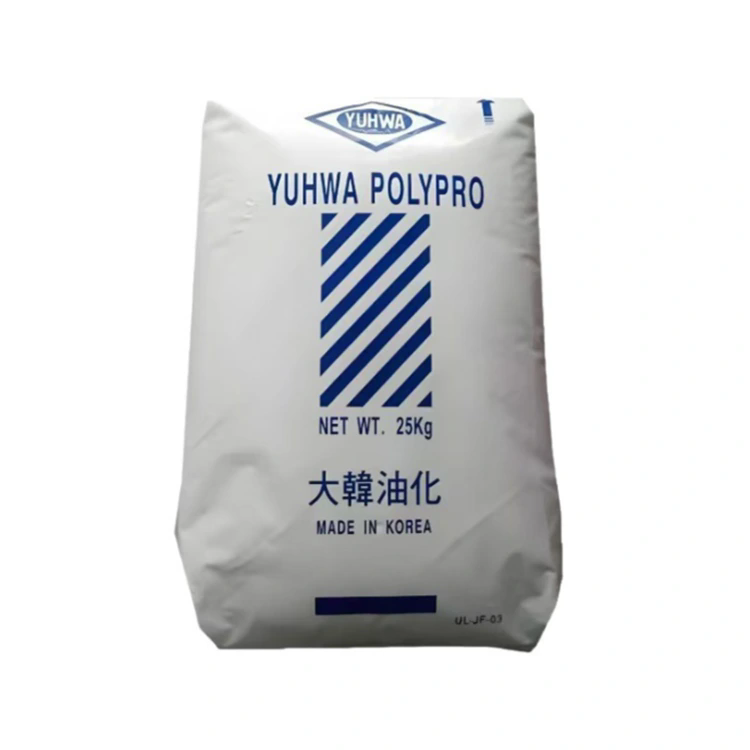
Packaging and handling should not be overlooked. The supplier's published standard packaging is 25 kg per bag, with a PE liner and woven outer sack. This is a useful reference for warehouse planning, but buyers should confirm the packaging arrangement for the specific grade and order. Storage conditions should follow the resin manufacturer's instructions, including protection from contamination, damaged packaging and unsuitable exposure during handling.
Our purchasing team should also check that the commercial documents use the same grade designation as the technical documents. The product name, grade number, batch reference and quantity should be consistent across the quotation, purchase order, packing list and certificate of analysis where supplied. This makes it easier to investigate discrepancies and trace material through production.
Supplier qualification is particularly important when material is sourced through a trading company. Buyers should understand the supply chain, identify the actual resin producer and confirm which party is responsible for technical documentation, quality claims and order coordination. Zhejiang Zhongwang International Trade Co., Ltd. is based in Yuyao, Zhejiang, and describes its role as coordinating sourcing through established petrochemical supply relationships, including SINOPEC and PetroChina. The exact producer and grade should still be confirmed for each purchase.
Samples and trial orders can help manufacturers evaluate a proposed grade before committing to regular supply. A meaningful trial should use the intended production equipment, mould or die, processing conditions and inspection criteria. Record the actual settings, output stability, scrap rate, cycle time and finished-part measurements. If the resin is being considered as a replacement for an established material, compare both grades using the same test methods and production conditions wherever possible.
Our factory should not be assumed to be the source of polymer production merely because the product is described as factory direct on a website. Buyers should verify the manufacturing origin and the commercial role of each supplier in the transaction. For procurement purposes, what matters is that the delivered grade matches the approved specification and is supported by the documents agreed before the order.
Supply continuity also belongs in the selection decision. A grade that performs well in trials may still create production risk if its availability is inconsistent or if an unapproved alternative is substituted. Manufacturers should discuss forecast volumes, minimum order quantities, sample availability, lead time and shipping destination before finalizing the purchasing plan. The supplier's published information indicates an average lead time within 15 working days, but this should be reconfirmed against the selected grade, quantity and current availability.
For manufacturers comparing several offers, a structured quotation request makes evaluation more efficient. Provide the required polymer type, existing grade reference if applicable, processing method, MFR target or other critical properties, colour, reinforcement level, annual or monthly volume, destination and documentation requirements. Zhejiang Zhongwang International Trade Co., Ltd. can use these details to check sourcing options and confirm which grades are available for review. A quotation should identify the proposed grade clearly so that the buyer can compare technical and commercial terms on the same basis.
Choosing the right PP Resin grade means matching the polymer to the application, processing method and measurable performance requirements. MFR, density, tensile strength, flexural modulus, impact strength, heat-deflection temperature, shrinkage and reinforcement content all contribute to the decision, but no single parameter can determine suitability on its own. Manufacturers should compare grade-specific datasheets, verify regulatory documents, run production trials and confirm supply consistency before approving a material for regular use.
Zhejiang Zhongwang International Trade Co., Ltd. offers sourcing support across food-grade, medical-grade, industrial-grade and glass-fibre-reinforced polypropylene categories. If you are evaluating a new material or looking for an alternative to an existing grade, share your processing method, target properties, current grade reference, application and order requirements. Contact the team to discuss available options, technical documentation, samples and delivery arrangements before moving to production approval.
How does melt flow rate affect the selection of a polypropylene grade?
Melt flow rate indicates how readily a resin flows under a specified test temperature and load. A higher value generally means easier flow under those test conditions and may be useful for thin-wall injection moulding or complex cavities. A lower value may be considered where melt strength or other performance characteristics are important. MFR should not be used as the only selection criterion because polymer structure, additives, part geometry and processing conditions also affect the result. Always compare values measured using the same test method and conditions.
Can one PP grade be used for both injection moulding and extrusion?
Not automatically. Injection moulding and extrusion place different demands on melt flow, melt strength, output stability and finished-product performance. Some polypropylene grades are designed for a particular process, while others may have a wider processing range. Before using an existing grade on another production line, review the manufacturer's processing recommendations and conduct a controlled trial. Confirm that the resin can meet the required dimensional, mechanical and appearance specifications under the new process conditions.
What is the difference between PPH, PPR and PPB grades?
These designations generally refer to different polypropylene polymer structures. PPH commonly identifies homopolymer PP, PPR identifies random copolymer PP and PPB commonly identifies block copolymer PP. Homopolymer grades are often selected for stiffness, random copolymers may be considered where clarity is important, and block or impact copolymers are commonly evaluated where improved toughness is needed. Actual performance varies by manufacturer and grade, so buyers should check the specific technical data sheet rather than rely on the designation alone.
What documents should manufacturers request for food-grade PP resin?
Manufacturers should request a current technical data sheet, safety data sheet and a grade-specific food-contact declaration or other applicable compliance evidence for the intended market. The documentation should identify the exact resin grade and relevant conditions of use, including food type, contact temperature and duration where applicable. Additional testing or finished-article assessment may be required depending on the application. A general statement that a material is food grade is not enough to establish compliance for every food-contact use.
How should buyers specify glass-fibre-reinforced polypropylene?
Buyers should state the required glass-fibre content, processing method, target stiffness and strength, impact requirements, colour, surface finish and dimensional tolerances. The component geometry and expected loading direction should also be considered because fibre orientation can influence finished-part properties. Request a grade-specific technical data sheet and confirm shrinkage, processing recommendations and any relevant test results. A sample trial using the intended mould is advisable before approving the material for regular production.