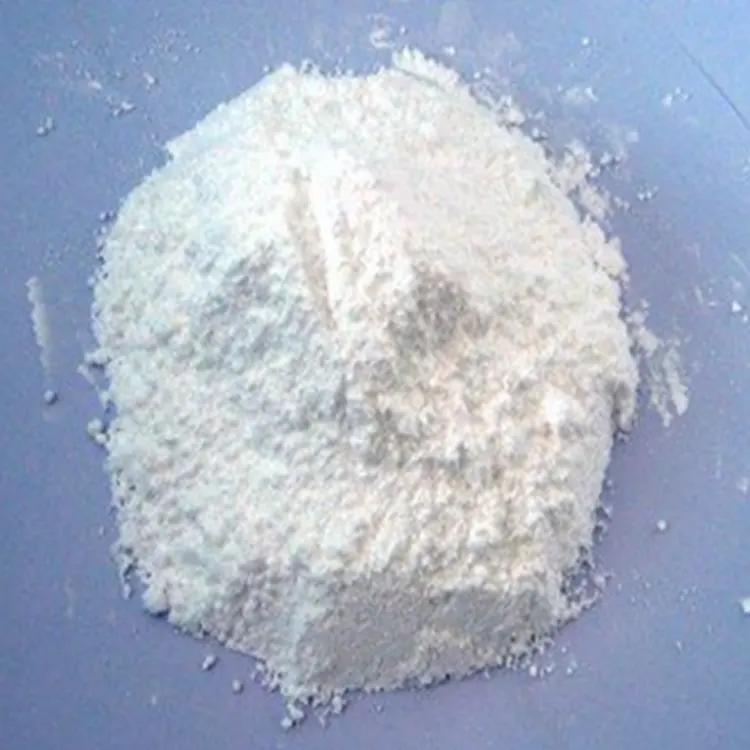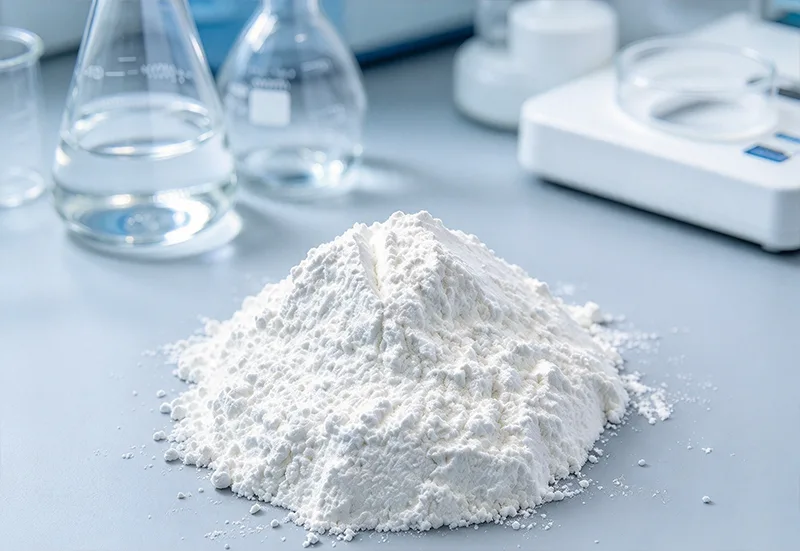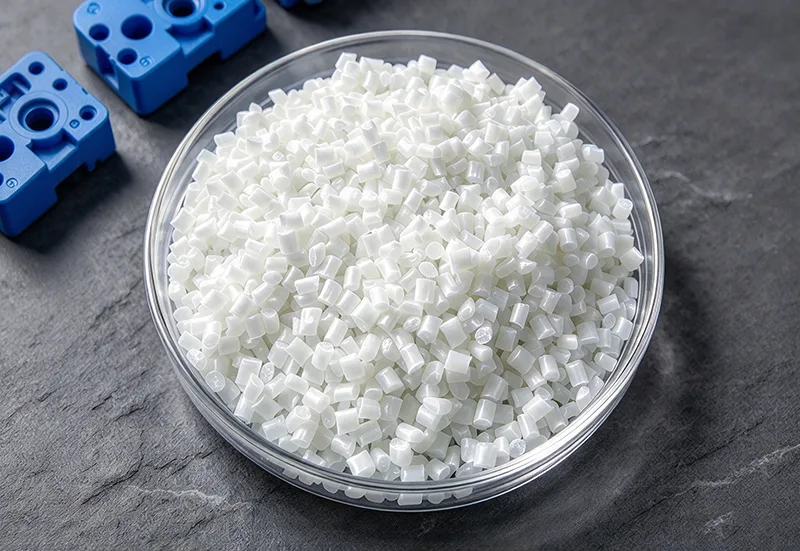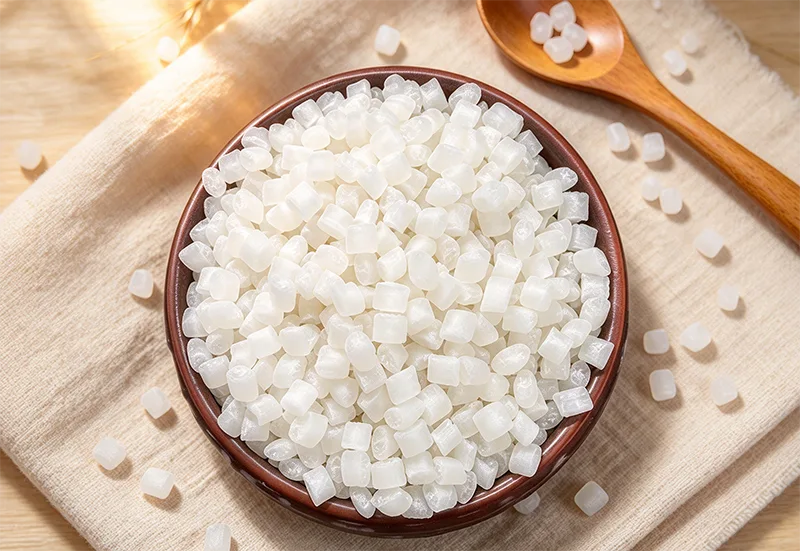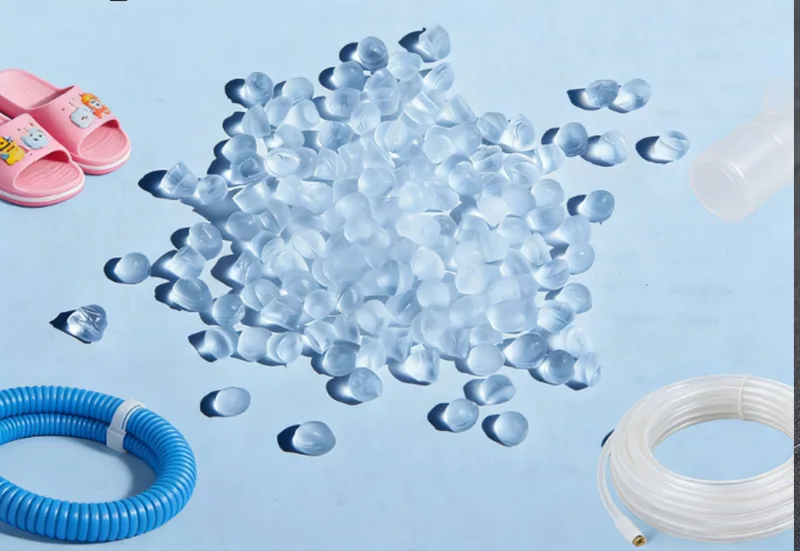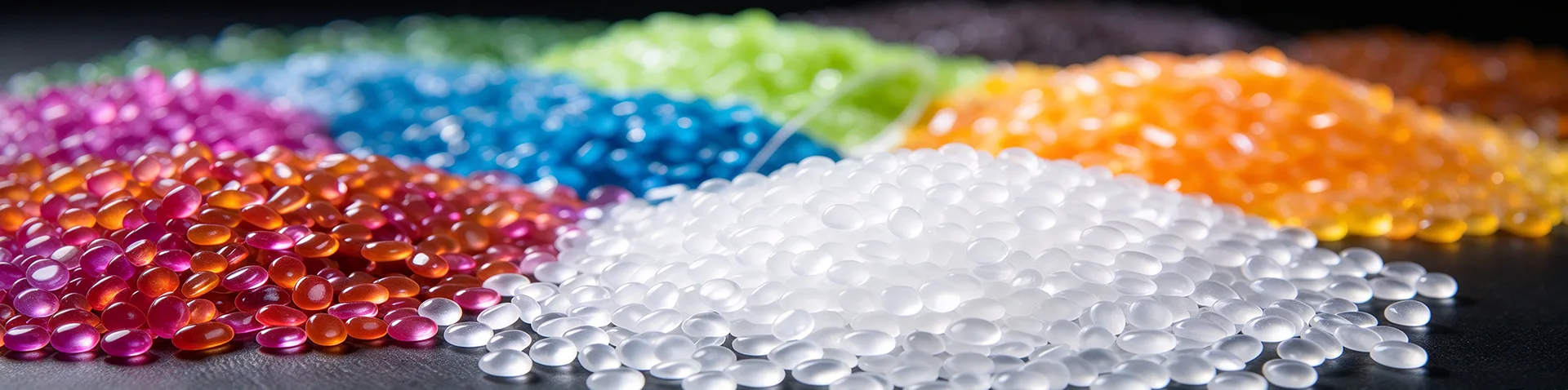
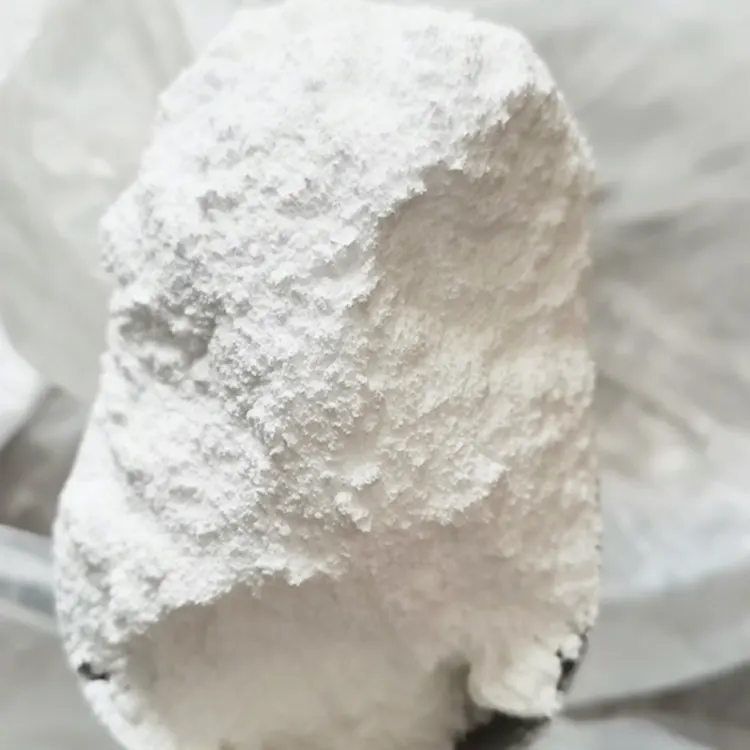
Zhongwang offers Suspension PTFE Resin to industrial buyers producing solid PTFE stock and molded parts. Its granular structure is designed for powder filling, compaction and thermal consolidation rather than conventional melt injection or lubricant-assisted paste extrusion.
Manufacturers normally fill a mold with the selected powder, form a green preform under controlled pressure, sinter it at elevated temperature and then cool it under a suitable schedule. Each stage affects internal density, dimensional change and the risk of cracking.
The most useful grade specification depends on the molding equipment. A free-flow powder that feeds consistently in an automated press may have different advantages from a finer grade used for small parts with demanding surface quality.
| Item | Reference Specification |
|---|---|
| Product Name | Suspension PTFE Resin |
| Brand | Zhongwang |
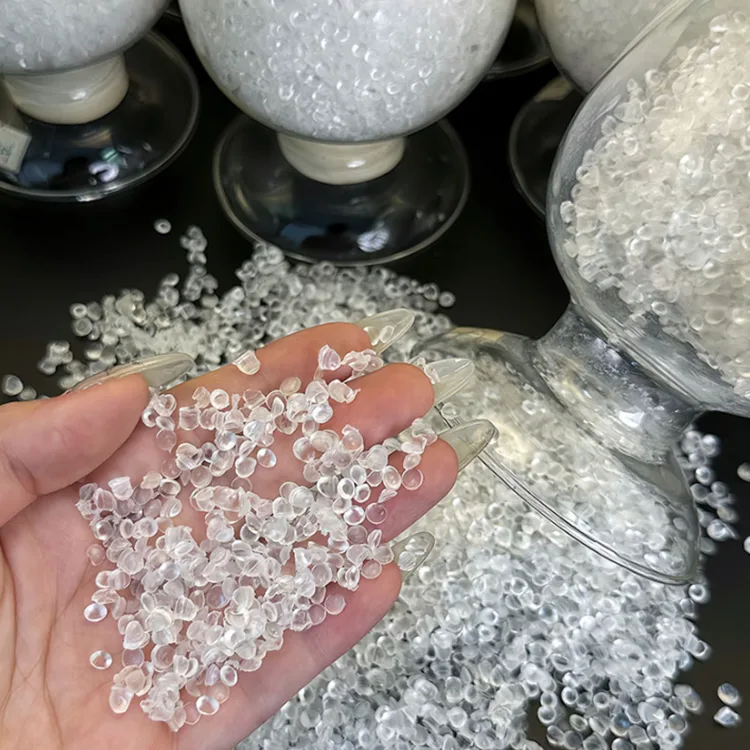
| Physical Form | White granular powder |
| Particle Size | 15–900 μm across grade families |
| Bulk Density | 300–1,000 g/L, grade-dependent |
| Melting Point | 327±5°C |
| Standard Specific Gravity | 2.13–2.19 |
| Tensile Strength | 22.5–36 MPa, typical reference |
| Elongation at Break | 250–400%, typical reference |
| Moisture | ≤0.04% |
| Reference Service Temperature | -200°C to 260°C |
| Forming Method | Cold compression or isostatic pressing, then sintering |
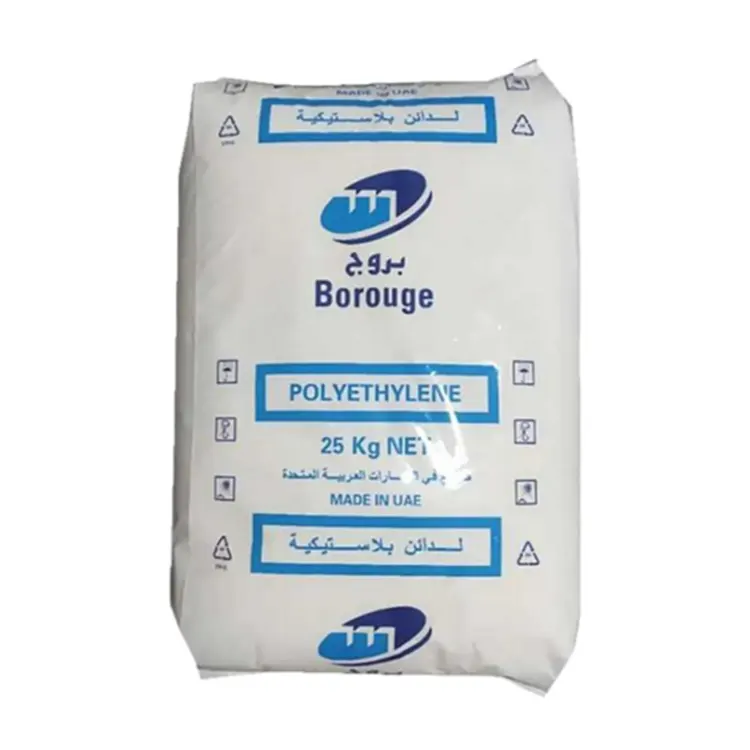
| Packaging | 20–25 kg in double PE bags and paper drum |
| Documentation | TDS, COA, SDS and applicable test documents |
Fine grades are relevant when producing small molded components, thin blanks or parts requiring a smoother surface after sintering and machining. The supplied grade reference lists 15–70 μm particles and a bulk-density range of 300–500 g/L.
Medium grades serve conventional rods, thicker sheets, stock shapes and sealing components. The reference gives a particle range of 70–260 μm. Trial results should establish how the powder compacts in the chosen mold size.
Granulated free-flow options are designed for better hopper delivery and automatic press filling. The supplied reference lists particle sizes of 200–900 μm and bulk densities of 600–1,000 g/L; the exact values depend on the grade.
High-cleanliness grades may be considered for components in semiconductor-support and high-purity chemical equipment. Buyers need clearly defined impurity and extractables criteria, not merely the description "high purity."
For Suspension PTFE Resin, a correct material grade is only the starting point. Undercompaction may leave voids; excessive pressure can also contribute to residual stress and defects. Preforming pressure needs to suit the article geometry, powder and equipment.
A typical sintering reference is 360–380°C, followed by controlled cooling. Large billets need particular attention to temperature gradients through the section. Heating and cooling too quickly can lead to internal defects, warpage or cracking.
Review molded density, surface condition and sectioned-part integrity after a trial. Where the part will be machined into seals or pressure-system components, check dimensional consistency and the mechanical requirements of the final application.
Particles left in molds, feeders or tooling can appear as dark marks in sintered PTFE. Keep powder-handling areas clean and use equipment-cleaning procedures when switching from other plastics.
Fine non-granulated powders may not feed as consistently in automatic hoppers as free-flow grades. Investigate bulk density and hopper behavior if molded weights vary between cycles.
Review preforming pressure, section thickness, temperature uniformity and cooling schedule. A powder test alone cannot isolate process-induced cracks.
Zhongwang coordinates material procurement through the Yuyao plastics supply network. For Suspension PTFE Resin, share the press type, desired blank size, particle-size preference, bulk-density target, filler requirements and cleanliness limits.
The supplied packaging reference is 20–25 kg with double PE inner bags and an outer paper drum. The buyer should validate a production trial and review TDS, COA and mechanical-test data applicable to the chosen grade before bulk approval.
It is not the normal material for paste extrusion. Dispersion-polymerized PTFE fine powder is used for lubricant-assisted paste extrusion.
A free-flow granulated grade is generally the more relevant starting point. Test hopper feeding, charge weight and compaction behavior on the actual press.
Potential causes include insufficient or uneven compaction and an unsuitable sintering profile. Large billets should be checked for internal integrity after trial production.
No. Regrind has different behavior and may compromise critical finished-part properties. Its use requires separate technical evaluation and is not recommended for demanding sealing applications.
Address
Building 1, China Plastics International Business Center, No. 285 Shunda West Road, Yuyao City, Ningbo City, Zhejiang Province, China
Tel
If you have any enquiry about quotation or cooperation, please feel free to email us or use the following inquiry form.Our sales representative will contact you within 24 hours. Thank you for your interest in our products.