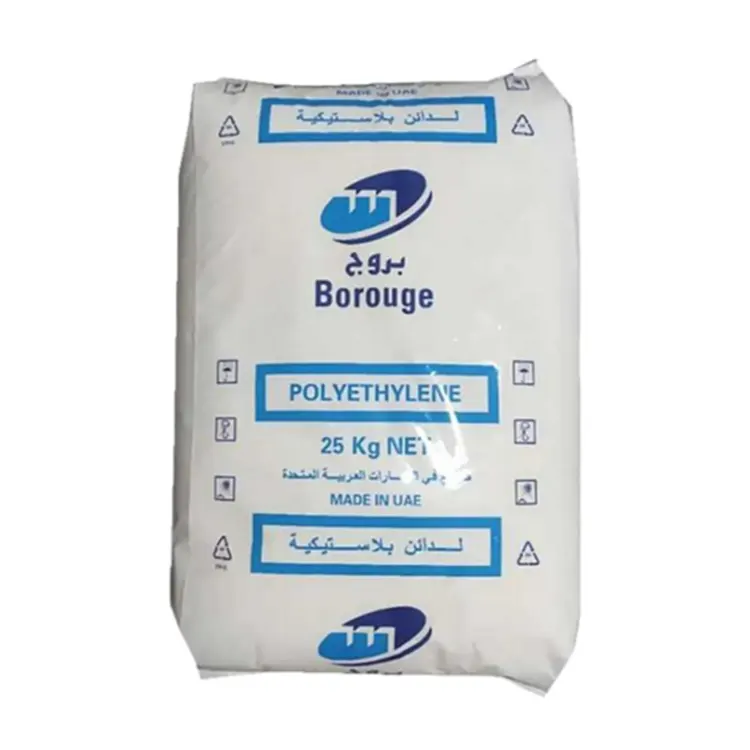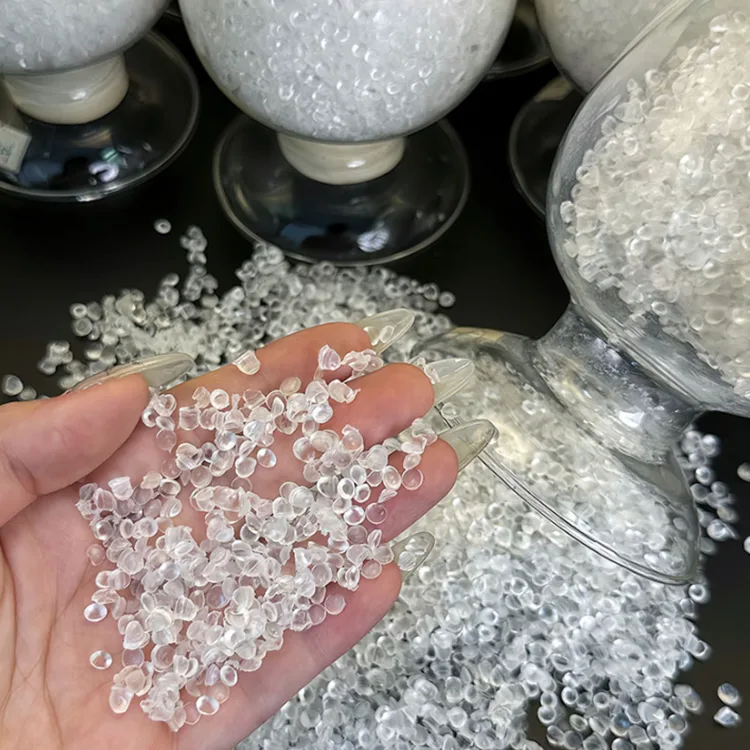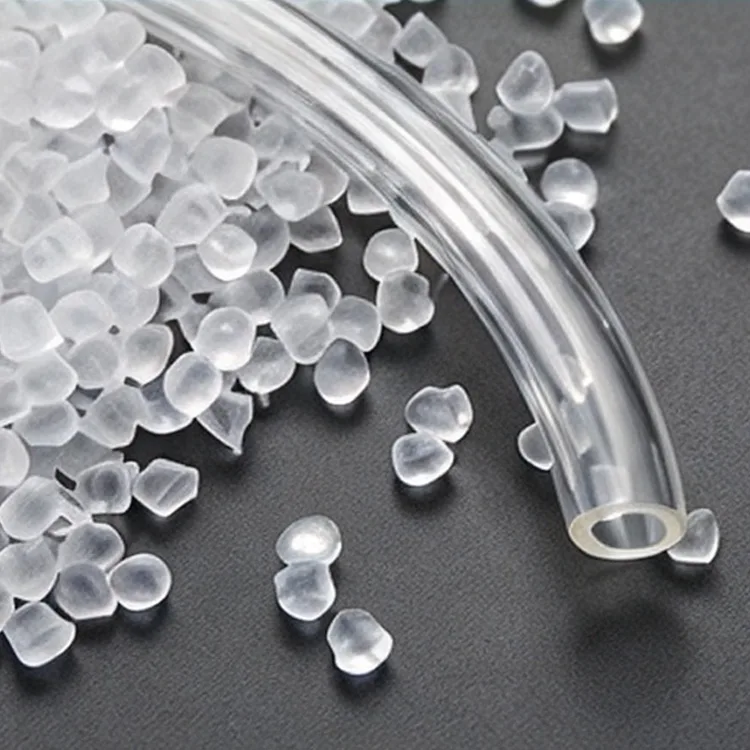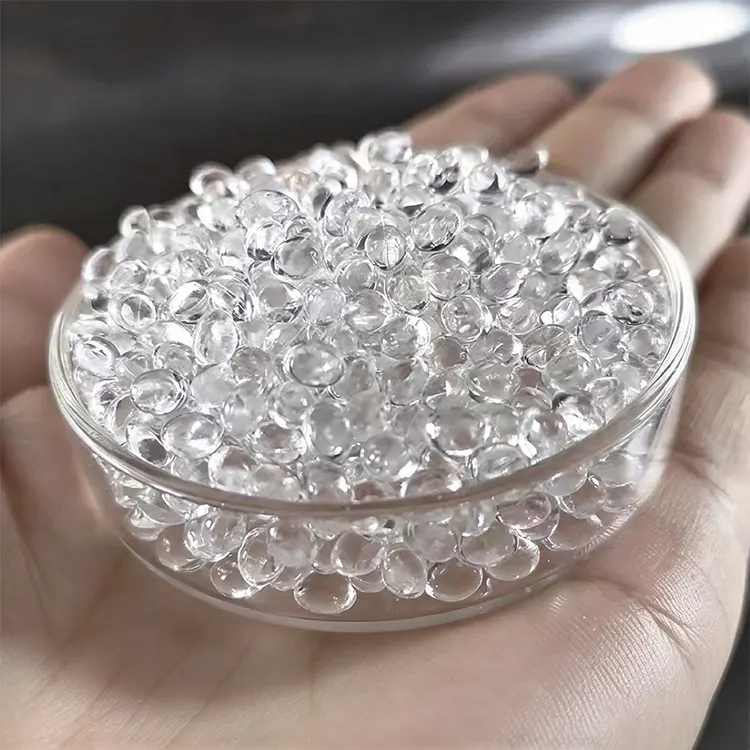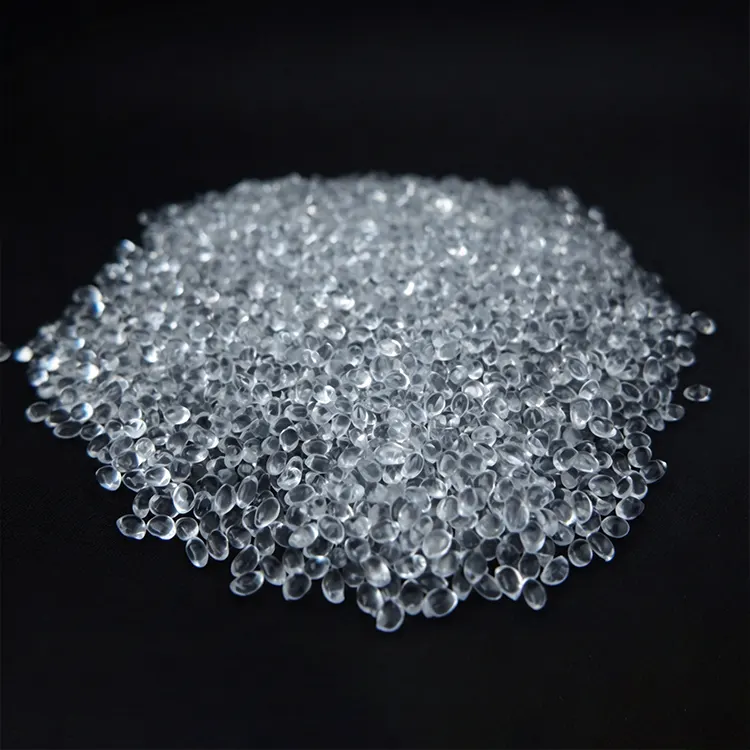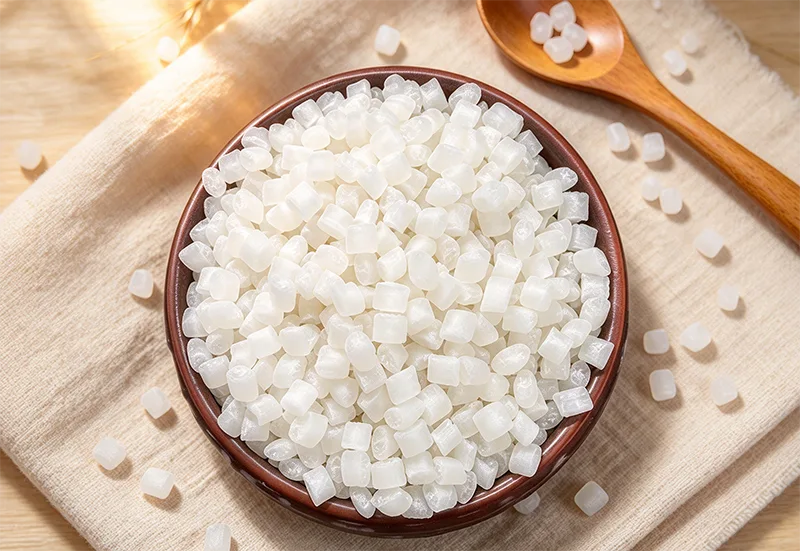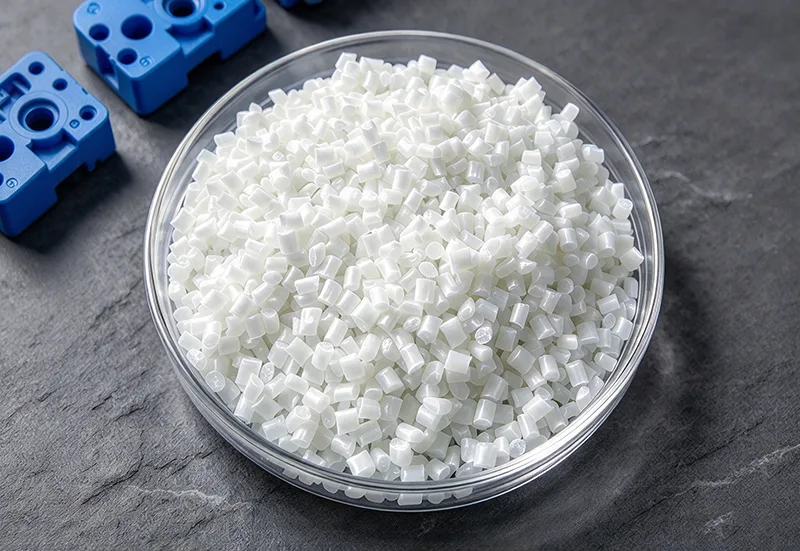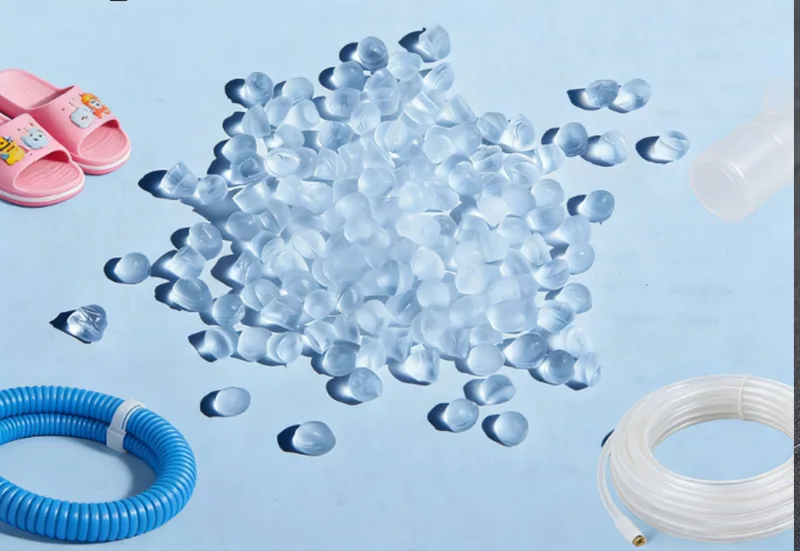
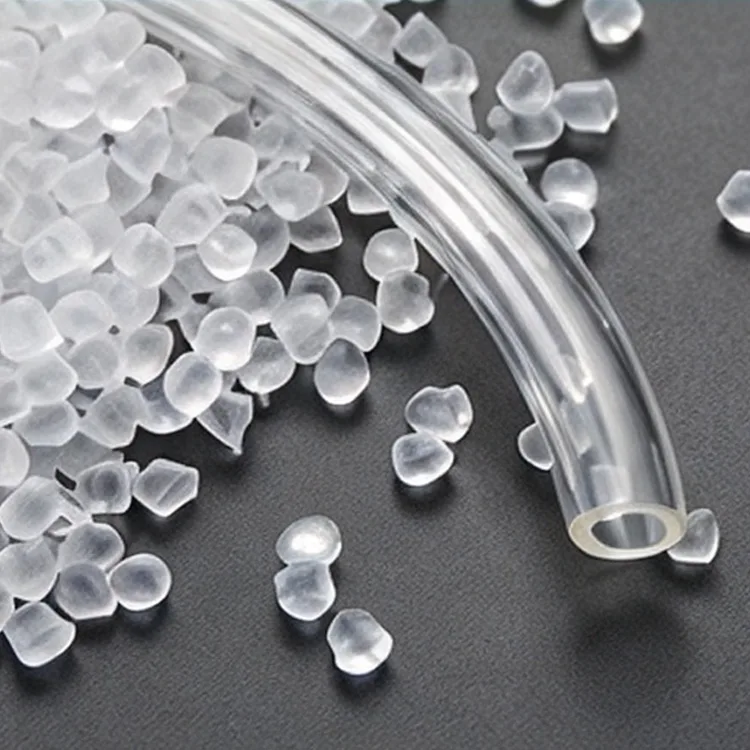
Extrusion-Grade Polyether TPU is a polyether-based thermoplastic polyurethane designed for applicable extrusion processes. It combines the continuous processing characteristics of TPU with the flexibility, elasticity and mechanical performance required by many flexible extruded products.
The polyether structure is an important consideration for applications exposed to moisture or requiring low-temperature flexibility. During extrusion, the selected grade also needs to provide suitable melt flow, dimensional stability and surface formation for the target product.
Different grades can vary in hardness, melt behavior, mechanical properties, abrasion resistance and environmental performance. Specific parameters should therefore be confirmed according to the selected grade and its TDS.
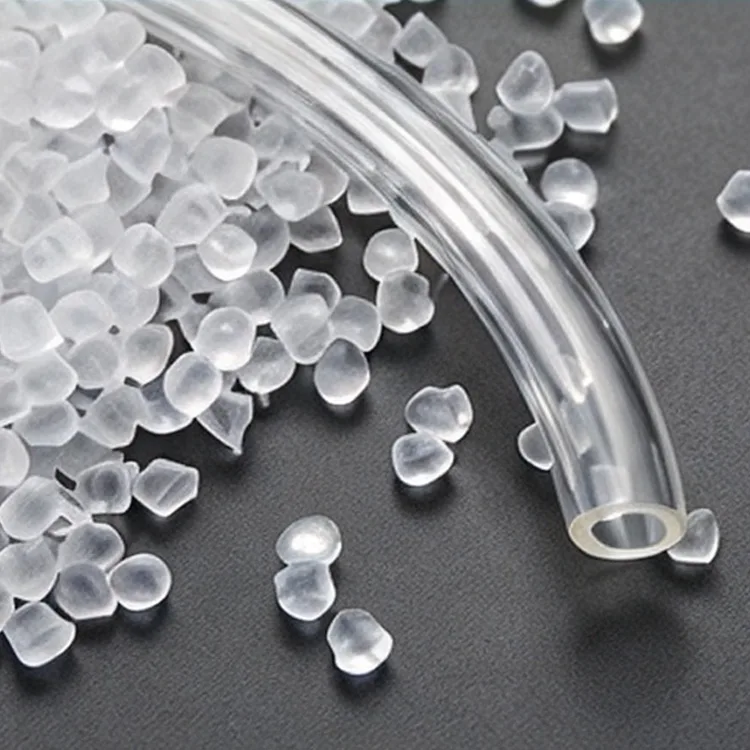
Extrusion-Grade Polyether TPU is TPU based on a polyether soft-segment structure and formulated for suitable extrusion applications.
Unlike injection molding, extrusion is a continuous process in which the polymer is melted, conveyed through a die and formed into a product with a continuous cross-section. The material therefore needs to maintain appropriate melt behavior during processing.
Depending on the grade and product design, Extrusion-Grade Polyether TPU can be used for:
· Flexible tubing
· Industrial hoses
· Flexible profiles
· Films
· Sheets
· Cable protection products
· Sealing profiles
· Other continuous TPU extruded products
Polyether-based TPU is often considered for products exposed to moisture or water because polyether TPU generally provides stronger hydrolysis resistance than polyester-based TPU.
Actual performance depends on the grade, temperature, water exposure, chemical environment and service duration.
Polyether TPU can maintain flexibility under relatively low-temperature conditions, depending on the selected grade. This characteristic can be useful for tubing, profiles and other flexible products that need to remain functional when temperatures change.
For continuous extrusion, consistent melting and die flow are important. The selected grade should match the extrusion equipment, die design, product dimensions and required production conditions.
The TPU structure provides elastic behavior and flexibility. Grade selection allows the material to be matched with different requirements for softness, recovery and mechanical support.
For products subject to repeated contact or friction, abrasion resistance can be an important consideration. The actual performance varies according to hardness, formulation and application conditions.
|
Item |
Reference Information |
|
Product Name |
Extrusion-Grade Polyether TPU |
|
Brand |
Zhongwang |
|
Material Type |
Thermoplastic Polyurethane |
|
TPU Type |
Polyether-based TPU |
|
Material Form |
Pellets |
|
Processing |
Extrusion |
|
Hardness |
Grade-dependent |
|
Density |
Grade-dependent |
|
Melt Flow / Rheological Behavior |
Grade-dependent |
|
Tensile Strength |
Grade-dependent |
|
Elongation at Break |
Grade-dependent |
|
Tear Strength |
Grade-dependent |
|
Abrasion Resistance |
Grade-dependent |
|
Compression Set |
Grade-dependent |
|
Hydrolysis Resistance |
Grade-dependent |
|
Low-Temperature Performance |
Grade-dependent |
|
Chemical Resistance |
Grade/formulation-dependent |
|
Surface Characteristics |
Grade/process-dependent |
|
Color |
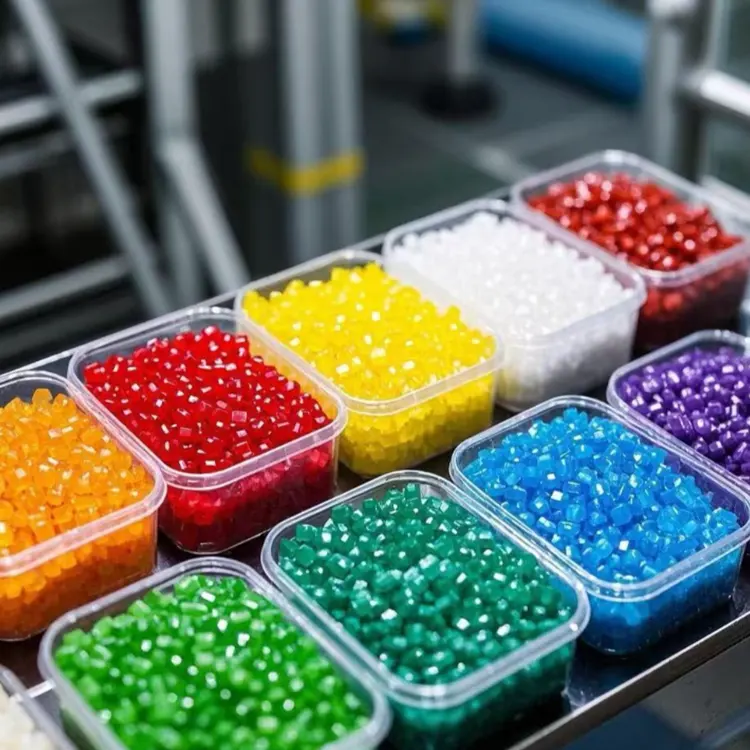
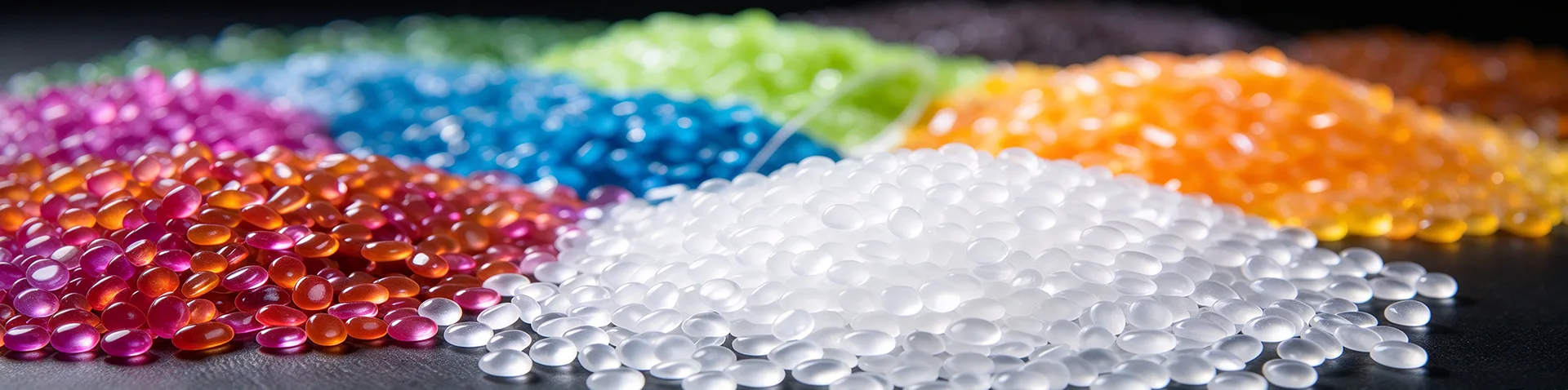
Natural / grade-dependent colors |
|
Packaging |
Standard resin packaging |
|
Technical Documents |
TDS, COA and applicable product documentation |
Specific technical values should be confirmed according to the selected grade and corresponding technical documentation.
TPU can absorb moisture from the surrounding environment. Excessive moisture during processing may affect melt behavior and finished-product quality.
Drying requirements should therefore be determined according to the selected grade and supplier's TDS. Material storage and handling should also minimize unnecessary moisture exposure.
During extrusion, the material is fed into the extruder, heated and plasticized before being conveyed toward the die.
Stable feeding and controlled melt temperature help maintain consistent extrusion output. Excessive thermal exposure should be avoided because TPU processing conditions are grade-dependent.
The die determines the basic cross-sectional shape of the extruded product. Die design, melt flow and material viscosity can influence dimensional consistency and surface appearance.
For tubing and profiles, the relationship between die dimensions, extrusion speed and cooling conditions should be considered during process setup.
After leaving the die, the extrudate is cooled and, where required, sized to achieve the specified dimensions.
Cooling rate, product geometry and line speed can affect shrinkage, dimensional stability and final surface quality.
Extrusion-Grade Polyether TPU can be considered for:
· Flexible tubes
· Industrial tubing
· Water-contact tubing
· Flexible hoses
· Cable and wire protection
· Flexible seals
· Extruded profiles
· Gaskets
· Films
· Sheets
· Protective strips
· Soft-touch profiles
· Other continuous flexible products
The selected grade should be evaluated against the actual temperature, mechanical load, moisture exposure and chemical environment.
For extrusion applications, material selection should consider both the polymer properties and the production process.
Important factors include:
1. Hardness — determines the flexibility and support level of the finished product.
2. Melt behavior — affects die flow and extrusion stability.
3. Product dimensions — tubing diameter, wall thickness and profile geometry influence material selection.
4. Mechanical requirements — tensile, tear, elongation and repeated deformation.
5. Abrasion conditions — important for products exposed to friction.
6. Moisture exposure — relevant for water-contact and humid-environment products.
7. Temperature range — especially for low-temperature applications.
8. Chemical environment — oils, greases, solvents or other chemicals may affect material performance.
9. Surface requirements — appearance and smoothness can depend on both grade and processing.
10. Extrusion equipment — screw design, die configuration and line conditions should be compatible with the selected material.
|
Factor |
Injection-Grade Polyester TPU |
Polyester TPU Extrusion Grade |
|
Base Structure |
Polyether-based |
Polyester-based |
|
Hydrolysis Resistance |
Often an important consideration |
Grade-dependent |
|
Moisture Exposure |
Suitable grades can be considered |
Grade-dependent |
|
Low-Temperature Flexibility |
Often an important characteristic |
Grade-dependent |
|
Abrasion Resistance |
Grade-dependent |
Grade-dependent |
|
Chemical Resistance |
Grade/formulation-dependent |
Grade/formulation-dependent |
|
Extrusion Processing |
Grade-dependent |
Grade-dependent |
|
Typical Selection Focus |
Moisture, flexibility and low-temperature conditions |
Mechanical, abrasion and chemical requirements depending on grade |
This comparison is a general material-selection reference. Actual extrusion performance should be confirmed through the selected product's technical data.
For TPU tubing and profiles, product geometry can strongly influence the extrusion process.
Wall thickness, die clearance, extrusion speed and cooling conditions should be coordinated to maintain dimensional consistency. For hollow products, internal air pressure or sizing conditions may also affect the final dimensions.
Material orientation and cooling can influence mechanical behavior and shrinkage. For products requiring tight dimensional tolerances, the complete extrusion process should be evaluated rather than considering resin properties alone.
We supply Extrusion-Grade Polyether TPU in pellet form for applicable continuous extrusion applications.
Located in Yuyao China Plastics City, we can communicate with B2B buyers about material selection, extrusion technology, product structure and application conditions.
For a specific project, buyers can provide the target hardness, product type, dimensions, extrusion method, temperature range, moisture exposure and mechanical requirements. We can then discuss the relevant material grade and technical documentation.
Depending on the selected grade, procurement documentation may include:
· Technical Data Sheet (TDS)
· Certificate of Analysis (COA)
· Product specifications
· Packaging information
· Applicable compliance or regulatory documentation, where available
The selected grade and technical parameters should be confirmed before commercial production.
Address
Building 1, China Plastics International Business Center, No. 285 Shunda West Road, Yuyao City, Ningbo City, Zhejiang Province, China
Tel
If you have any enquiry about quotation or cooperation, please feel free to email us or use the following inquiry form.Our sales representative will contact you within 24 hours. Thank you for your interest in our products.