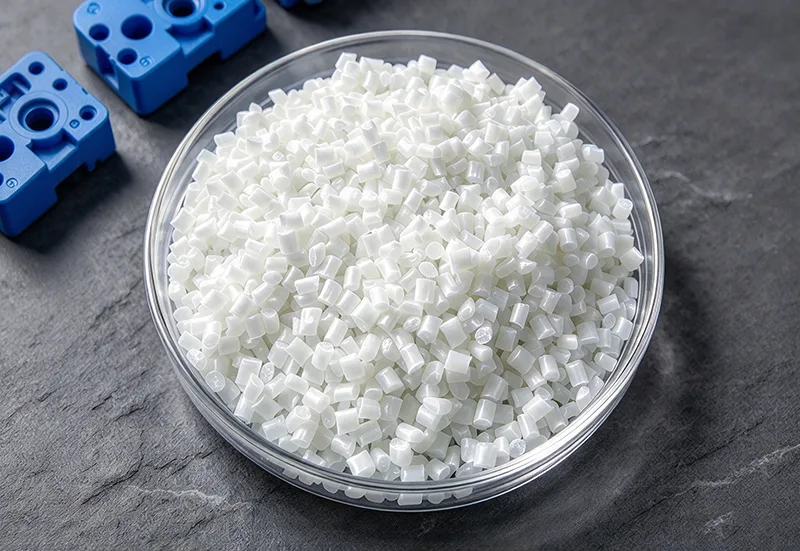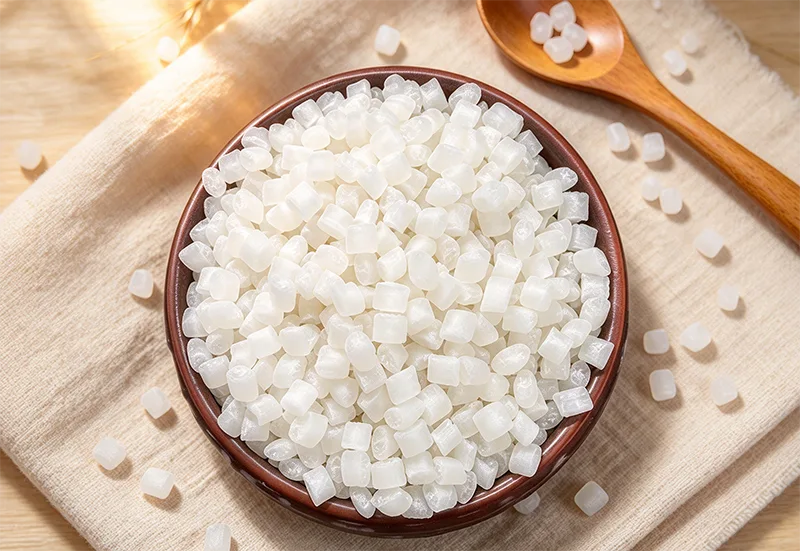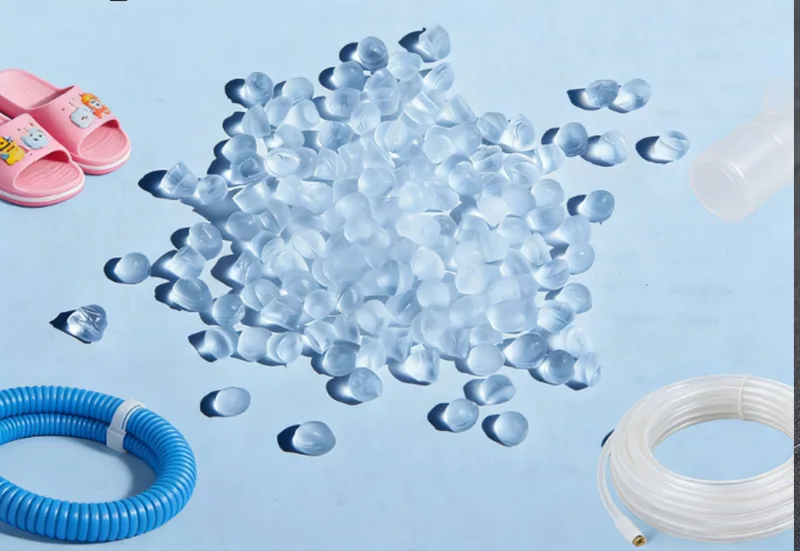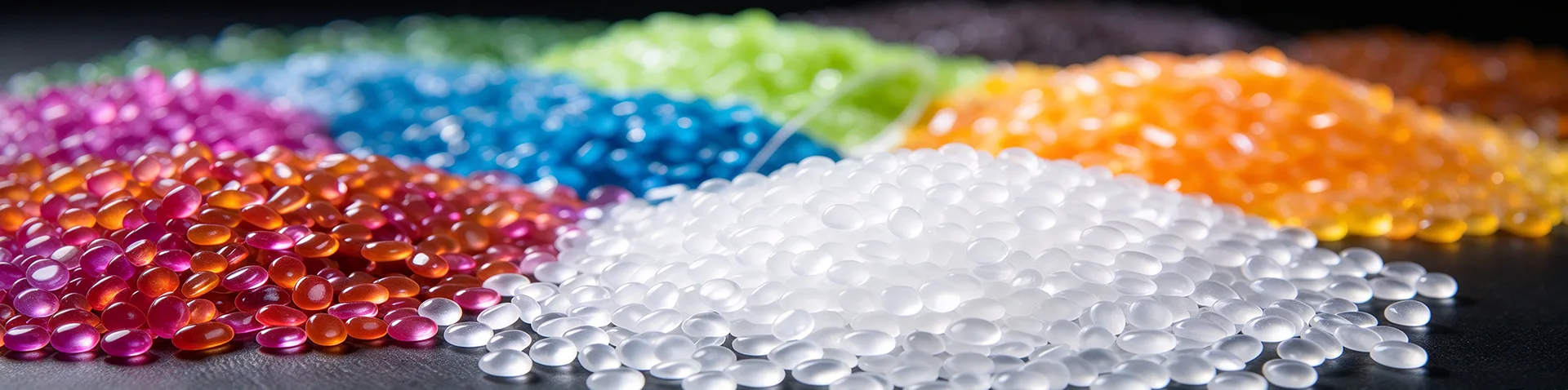
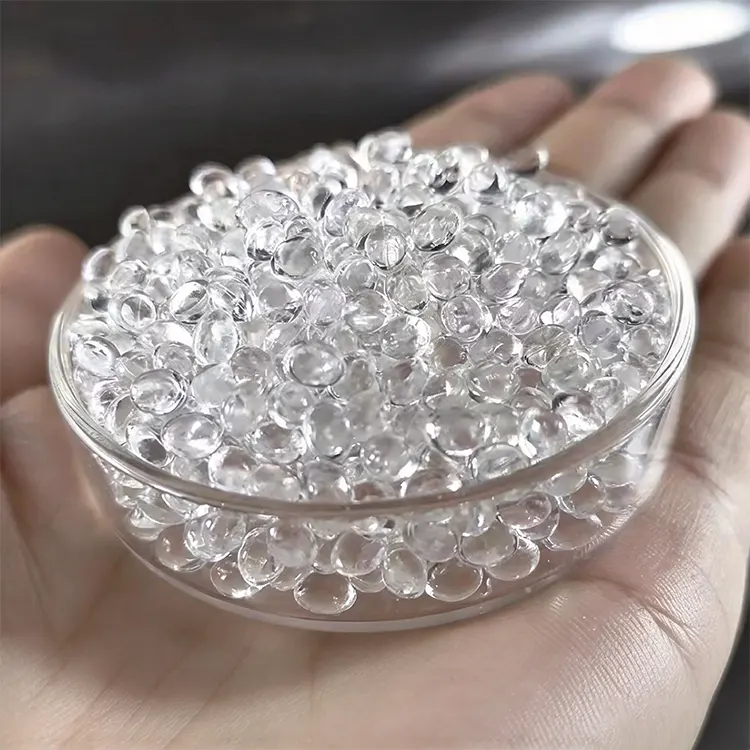
For complex molded parts where abrasion and flexibility must coexist, Injection-Grade Polyester TPU is one of the resin categories Zhongwang helps industrial buyers evaluate against their production and application specifications.
Polyester-based thermoplastic polyurethane combines elastic and thermoplastic characteristics within a segmented polymer structure.
The polyester soft segment contributes to the material's mechanical behavior, while the overall formulation determines hardness, tensile performance, tear resistance, elasticity, and chemical compatibility.
Unlike a rigid plastic selected primarily for dimensional stiffness, injection-grade TPU can be considered when the finished component needs to deform under loading and recover afterward.
The resin is also relevant to parts exposed to rubbing, repeated contact, or mechanical movement.
However, a molded component's performance depends on far more than the raw resin. Wall thickness, gate location, cooling, mold surface, and processing conditions can all influence its final properties.
Industrial wheels and rollers can experience repeated contact pressure, rolling friction, and surface abrasion.
Injection-Grade Polyester TPU may provide a useful combination of flexibility and wear resistance for suitable designs.
Material evaluation should consider hardness, contact pressure, rolling speed, operating temperature, and the surface against which the component runs.
Wear-test results should be compared under representative conditions rather than using hardness as a direct measure of service life.
Protective parts often require impact response, resistance to tearing, and sufficient flexibility for installation.
A soft grade may be easier to deform during assembly, while a harder grade may provide greater structural support.
Gate placement, wall thickness, and local stress concentration should be considered when designing the molded component.
Elastic molded inserts may experience repeated compression, bending, or contact with surrounding equipment.
Hardness, compression behavior, tear resistance, and dimensional accuracy should be assessed together.
Where oils or greases are present, compatibility must be verified against the actual fluid and exposure conditions.
Hardness influences the resistance a material provides to indentation, but it does not fully describe tensile strength, wear resistance, or fatigue performance.
For soft grips or protective covers, flexibility and elastic recovery may be primary requirements.
For rollers and mechanical inserts, the chosen hardness must be balanced against load support, deformation, and wear behavior.
A harder polyurethane grade is not necessarily the best option for every abrasion application, because contact conditions and part design also affect wear.
The required Shore hardness and corresponding mechanical properties should be established through the selected resin's data sheet and finished-part testing.
| Item | Reference Information |
|---|---|
| Product Name | Injection-Grade Polyester TPU |
| Brand | Zhongwang |
| Material Family | Thermoplastic Polyurethane |
| Soft-Segment Type | Polyester-Based |
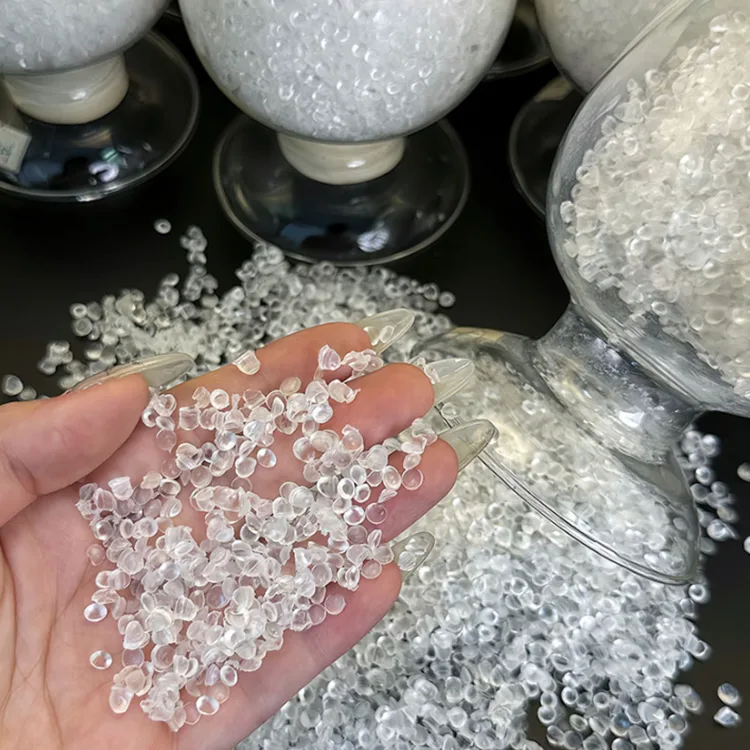
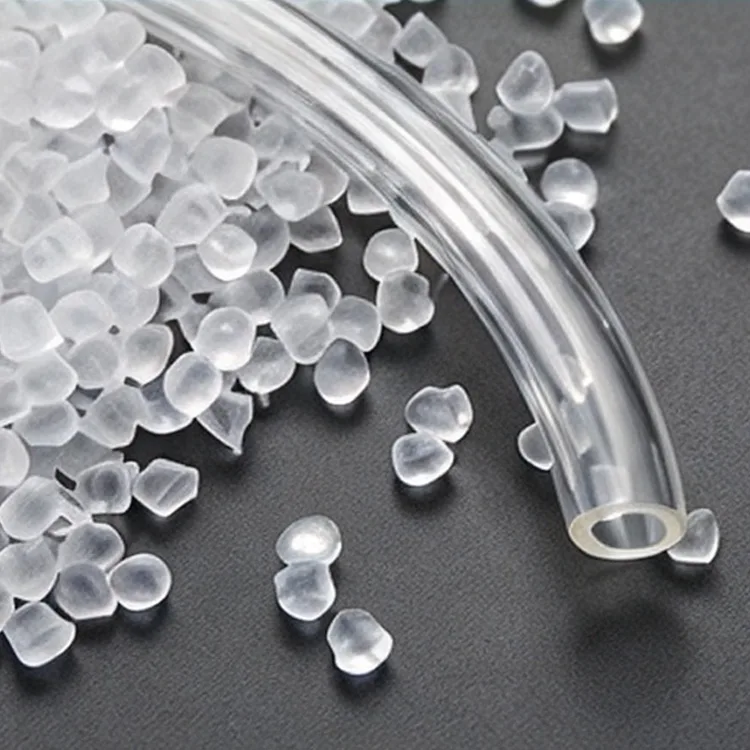
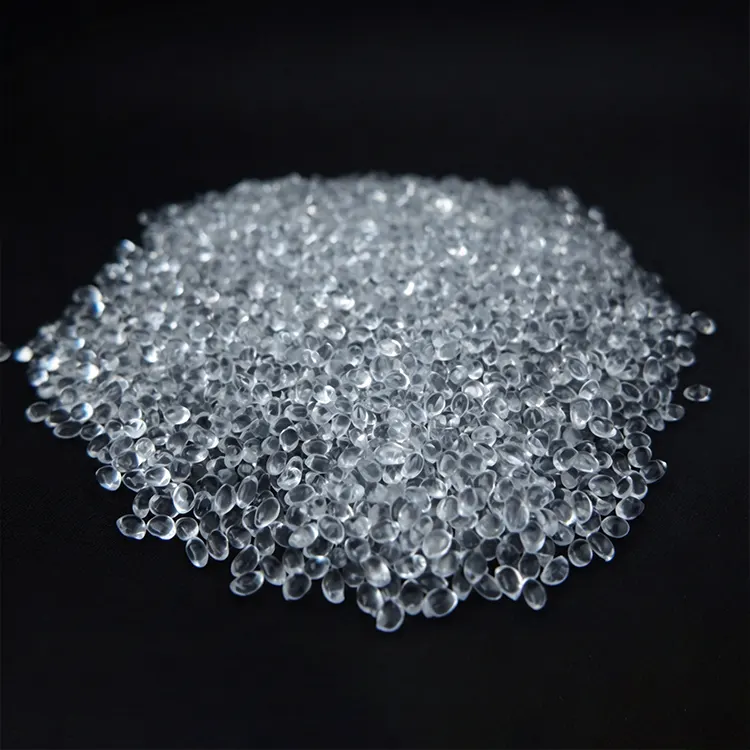
| Physical Form | Pellets |
| Primary Processing Method | Injection Molding |
| Hardness | Grade-dependent |
| Density | Grade-dependent |
| Melt Flow | Grade-dependent |
| Tensile Strength | Grade-dependent |
| Elongation | Grade-dependent |
| Tear Strength | Grade-dependent |
| Abrasion Resistance | Grade- and test-dependent |
| Compression Set | Grade-dependent |
| Chemical Compatibility | Grade- and exposure-dependent |
| Surface Appearance | Material-, mold-, and processing-dependent |
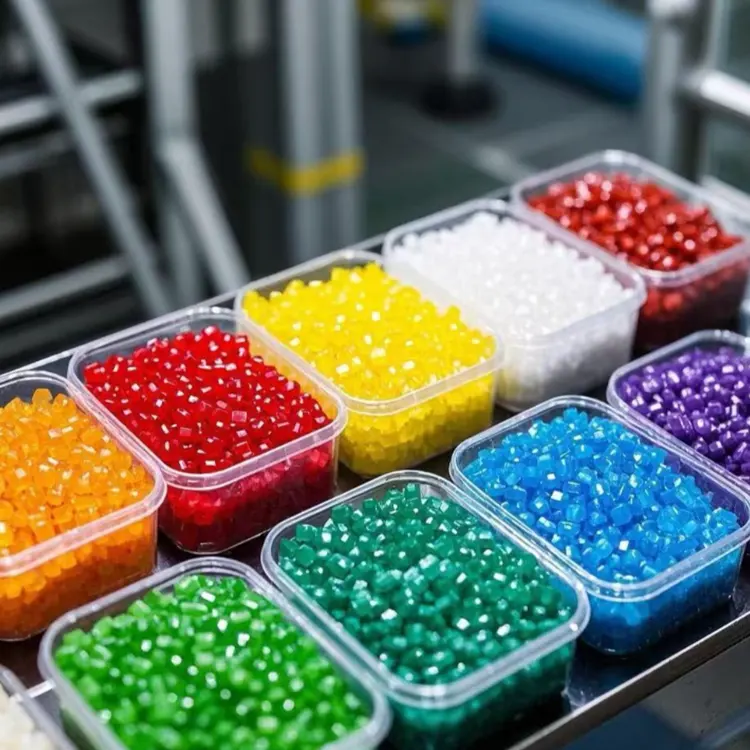
| Color | Natural or Grade-Dependent Colors |
| Packaging | Standard Resin Packaging |
| Technical Documentation | TDS, COA and Applicable Product Documentation |
TPU can be sensitive to moisture during melt processing. Excessive moisture may cause polymer degradation, bubbles, surface defects, or changes in mechanical properties.
The required drying temperature, duration, and residual moisture limit should be taken from the particular resin grade's technical instructions.
Gate position determines how molten resin enters and fills the mold cavity.
In parts with thin sections, long flow paths, or complex shapes, unsuitable gating can contribute to incomplete filling or weak weld-line regions.
The gate design should be evaluated together with the selected material's flow characteristics.
Packing and cooling conditions influence shrinkage, dimensions, and the appearance of the molded part.
Improper pressure or cooling may produce sink marks, deformation, or unacceptable dimensional variation.
Cooling time should suit the component thickness and its required dimensional tolerance.
Mold texture, temperature, resin formulation, and demolding conditions affect the appearance of finished TPU parts.
Flexible molded components may deform during ejection if the design or process does not provide adequate support.
Surface quality should be checked under the intended production conditions rather than assessed only from laboratory specimens.
Polyester-based TPU can be considered for some applications involving oils and greases, but resistance depends on the particular chemical, concentration, temperature, and contact duration.
Buyers should not assume that compatibility with one lubricant establishes resistance to every oil or solvent.
Polyester and polyether polyurethane also differ in their response to some moisture and hydrolysis conditions.
For products subject to prolonged humidity or warm-water exposure, material selection should include hydrolytic-aging considerations and an appropriate comparison with polyether-based grades.
Zhejiang Zhongwang International Trade Co., Ltd. coordinates thermoplastic raw material sourcing within the Yuyao China Plastics City supply network.
Manufacturers purchasing Injection-Grade Polyester TPU should provide the required hardness, part geometry, minimum wall thickness, injection molding conditions, wear requirements, expected chemical exposure, and annual quantity.
Grade comparison should include both resin documentation and actual molded-part evaluation.
Trial parts can be checked for dimensional stability, surface quality, abrasion behavior, tensile or tear performance, and any relevant assembly requirements.
Suitable polyester-based grades can provide a combination of flexibility, mechanical properties, and abrasion resistance. The final grade should be selected according to contact pressure, operating speed, wear conditions, and desired hardness.
No. Wear depends on the resin formulation, counterface material, contact conditions, temperature, and loading. Hardness is only one selection factor.
Possible causes include wall-thickness variation, insufficient packing, unsuitable processing conditions, or inadequate cooling. Mold design and process settings should be evaluated together.
Selected grades may be suitable for certain oils and greases. Compatibility must be verified for the specific fluid, concentration, operating temperature, and exposure duration.
Moisture can interfere with melt processing and may promote polymer degradation or visible molding defects. The appropriate drying procedure should follow the selected grade's technical data.
Address
Building 1, China Plastics International Business Center, No. 285 Shunda West Road, Yuyao City, Ningbo City, Zhejiang Province, China
Tel
If you have any enquiry about quotation or cooperation, please feel free to email us or use the following inquiry form.Our sales representative will contact you within 24 hours. Thank you for your interest in our products.