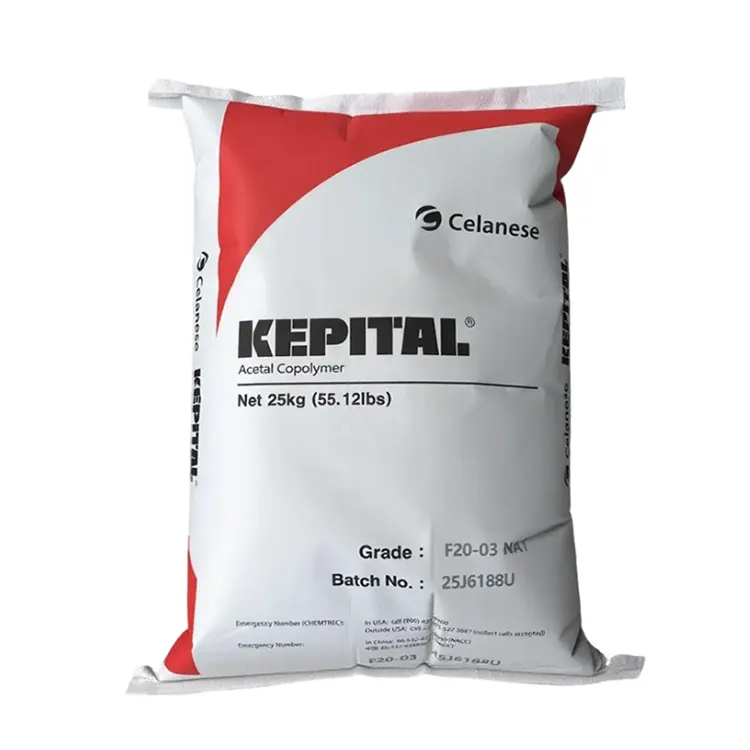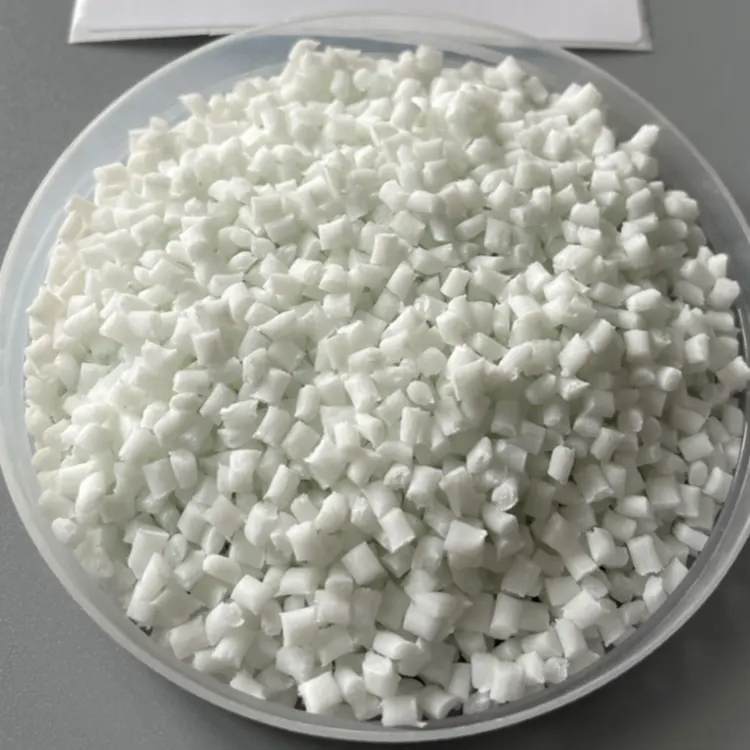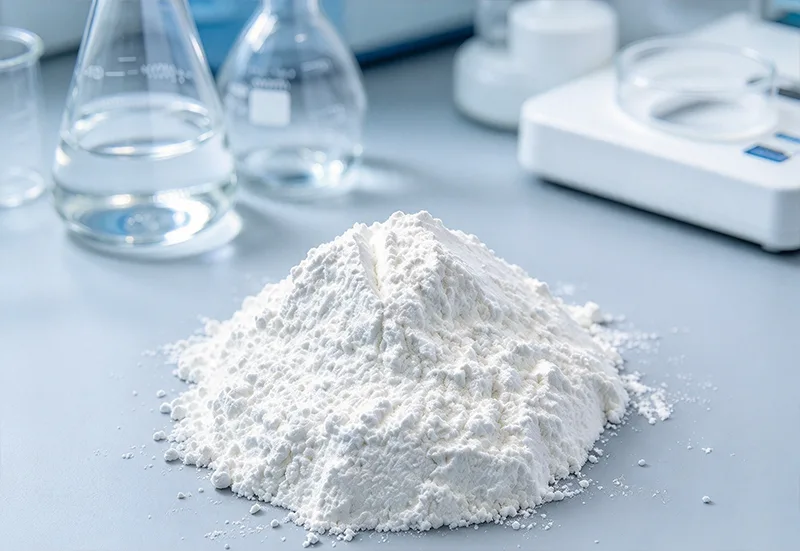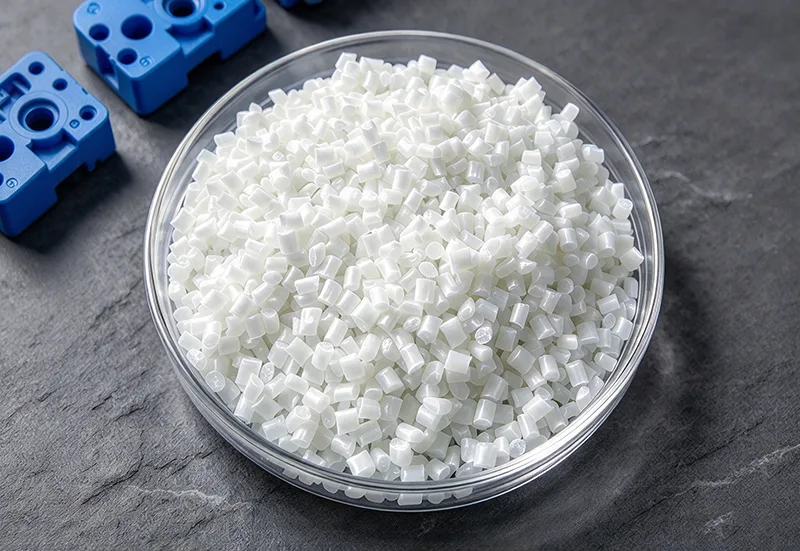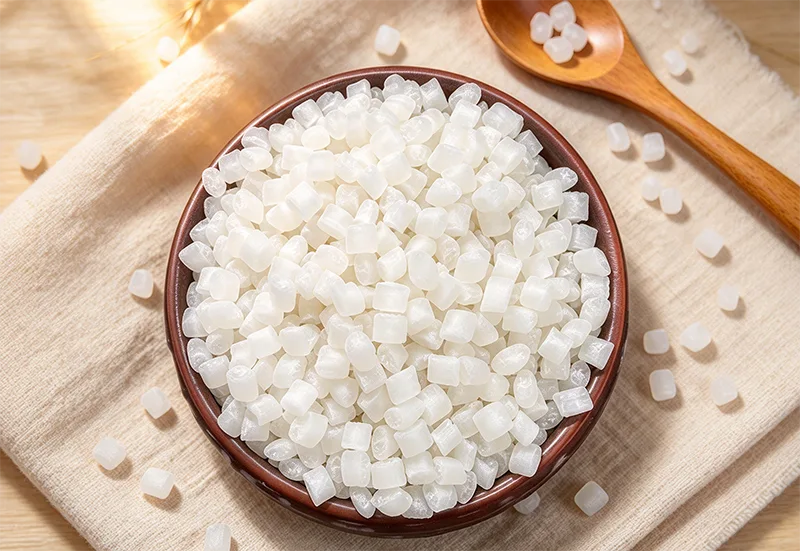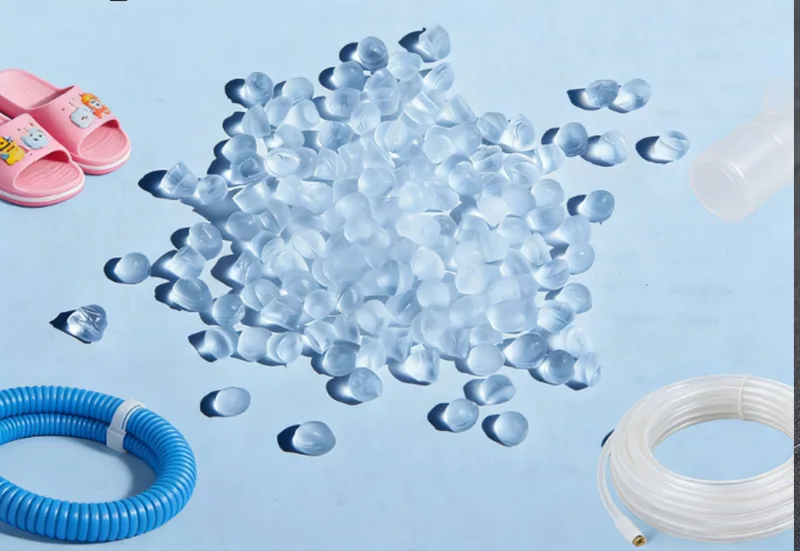
Water-contact suitability is the first question Zhongwang addresses when industrial purchasers evaluate POM-C Copolymer for valves, impellers, connectors and mechanical assemblies. This semi-crystalline acetal copolymer contains comonomer units that modify the polymer's thermal and chemical stability compared with homopolymer POM.
It combines low-friction behavior and useful mechanical properties with a generally broader processing window and better hydrolysis-related resistance than POM-H.
These advantages are relevant to selected water-handling parts, but they do not make the resin universally resistant to strong acids, concentrated oxidizers or every hot liquid.
The reference material describes use in hot-water applications up to approximately 85°C for suitable grades. This should be treated as a selection reference rather than a universal pressure-and-temperature rating for finished plumbing products.
Temperature affects both chemical aging and mechanical behavior. A valve core in intermittent warm water may experience different conditions from a pump component continuously exposed to pressurized hot water.
Evaluate service duration, temperature peaks and any mechanical stress while the component is wet.
Water may contain dissolved minerals, treatment chemicals or cleaning additives. These can change the compatibility requirements compared with clean laboratory water.
Concentrated strong acids and strong oxidizing agents remain inappropriate environments without evidence of compatibility.
Improved hydrolysis resistance does not establish the pressure rating of a valve body or fitting. Geometry, wall thickness, stress concentration and long-term creep also determine performance.
Pressure-containing applications require finished-part evaluation to applicable design and product standards.
The reference range of 1.5–4 g/10 min is relevant to thicker mechanical components, large impellers and load-bearing valve parts where melt strength, toughness and creep-related behavior are important.
Grades around 7–13 g/10 min are suited to many conventional molded parts, including water-valve cores, connectors, moving appliance components and automotive fluid-system components.
They balance processability with the mechanical characteristics required for general production.
The reference range of 18–30 g/10 min favors easier filling of narrow cavities or multi-cavity tooling. Higher flow may involve trade-offs in toughness and creep performance, so service requirements remain important.
| Parameter | Reference Data |
|---|---|
| Product Name | POM-C Copolymer |
| Brand | Zhongwang |
| Material | Polyoxymethylene Copolymer / Acetal Copolymer |
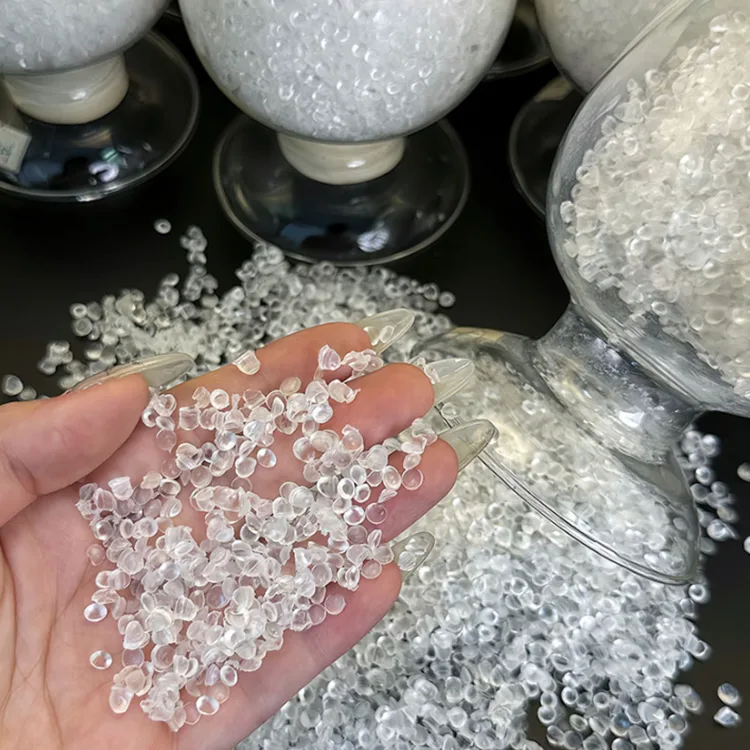
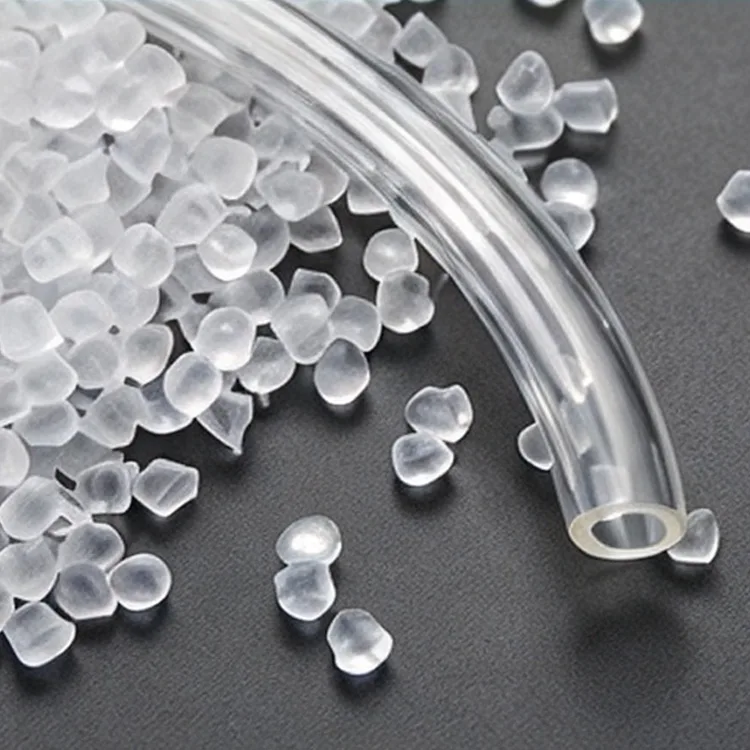
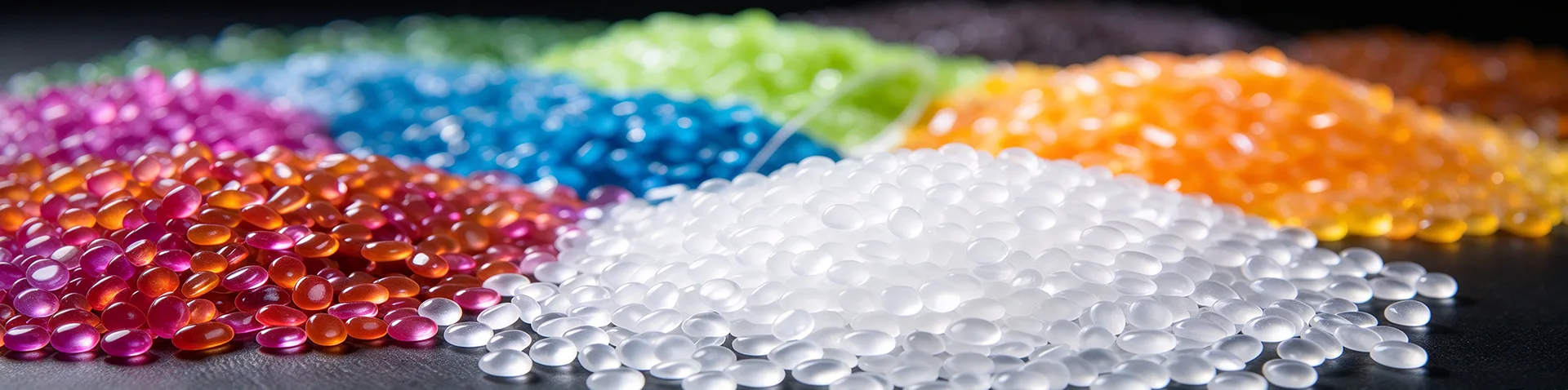
| Supply Form | Pellets |
| MFR | 1.5–30 g/10 min, grade-dependent |
| Density | 1.40–1.41 g/cm³ |
| Melting Point | 164–167°C |
| Tensile Strength | 60–67 MPa, typical |
| Flexural Modulus | 2,500–2,800 MPa, typical |
| Notched Izod Impact at 23°C | 5.5–7 kJ/m², typical |
| Heat Deflection Temperature at 1.82 MPa | 90–100°C, typical |
| Reference Service Temperature in Air | -40°C to 100°C |
| Reference Hot-Water Exposure | Up to approximately 85°C for suitable grades and conditions |
| Mold Shrinkage | 1.8–2.2% |
| Flammability | UL94 HB, grade-specific reference |
| Appearance | Natural White or Black Pellets |
| Processing | Injection Molding |
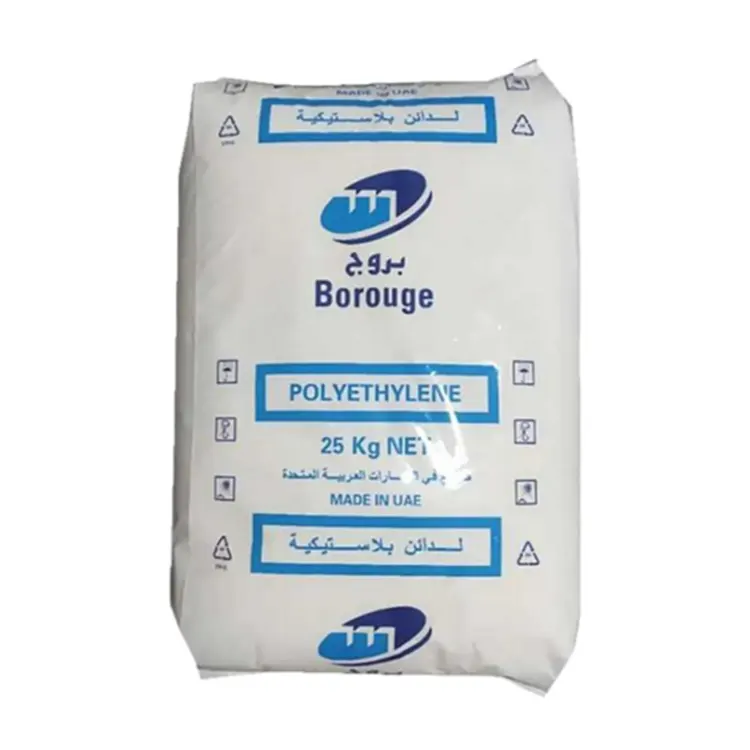
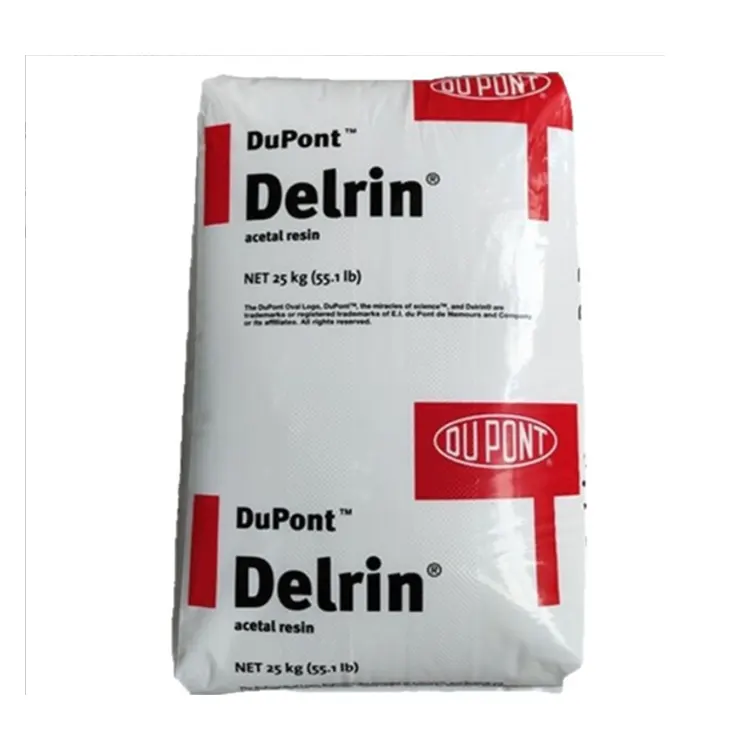
| Packaging | 25 kg Moisture-Protected Woven Bag |
| Documentation | TDS, COA, SDS and Applicable Mechanical Test Reports |
Thick acetal parts may develop internal voids when shrinkage is not compensated adequately during packing and cooling. The copolymer structure can reduce certain porosity risks relative to homopolymer grades, but it does not eliminate them.
Inspect gate dimensions, holding pressure, wall thickness and cooling when evaluating thick impellers or valve bodies.
Excessive or uneven shrinkage may produce visible sinks or unacceptable dimensional variation. Use repeatable packing and cooling conditions, followed by inspection after the component has stabilized.
The reference barrel temperature range is approximately 185–210°C. Overheating or prolonged residence, particularly above the material's recommended limits, can cause POM degradation and hazardous formaldehyde emissions.
Follow the actual grade's processing and safety guidance. Clean equipment carefully during material changes and avoid incompatible contamination.
Acetal copolymer absorbs relatively little water, but condensation from humid storage may cause surface defects. The supplied reference gives 80°C for 2–4 hours as a conditional drying recommendation.
Acetal copolymer generally has better resistance to hydrolysis-related degradation, although suitability depends on temperature, fluid chemistry, time and grade.
No. Strong acids, concentrated oxidizing media and other aggressive chemicals can be unsuitable. Verify compatibility with the complete cleaning formulation.
No. Pressure capability depends on finished-part design, wall thickness, long-term loading and the applicable component standard.
A lower-MFR grade may be relevant when thick sections and sustained mechanical loading are important, but mold filling and processing feasibility must also be assessed.
Internal voids may result from shrinkage, inadequate packing, gate restrictions and cooling conditions. Section inspection or another suitable validation method can help identify the defect.
Address
Building 1, China Plastics International Business Center, No. 285 Shunda West Road, Yuyao City, Ningbo City, Zhejiang Province, China
Tel
If you have any enquiry about quotation or cooperation, please feel free to email us or use the following inquiry form.Our sales representative will contact you within 24 hours. Thank you for your interest in our products.