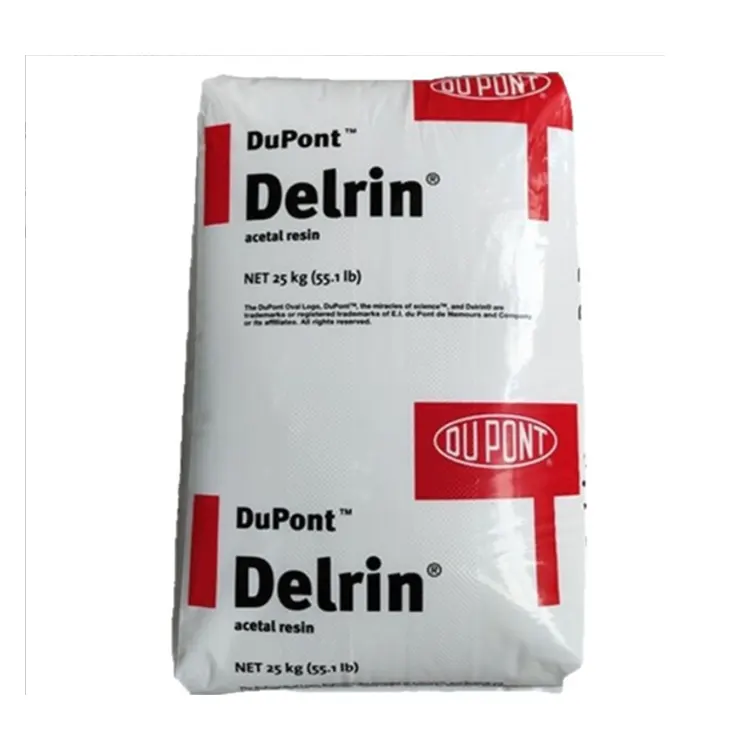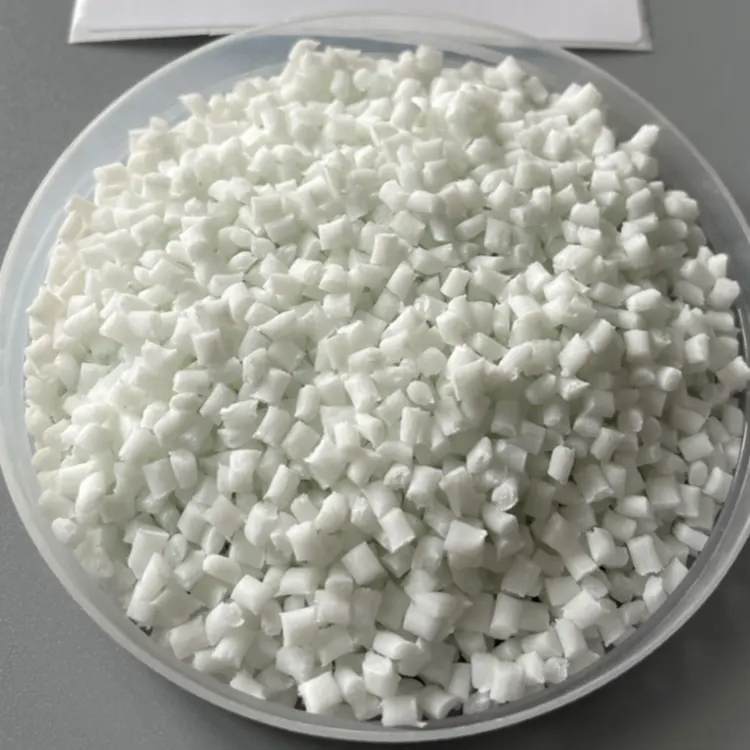
For manufacturers buying POM-H Homopolymer for gears, bearings and snap-fit mechanisms, Zhongwang emphasizes mechanical duty cycles, component geometry and molding shrinkage during grade comparison. Homopolymer acetal has a relatively regular molecular structure and higher crystallinity than conventional copolymer POM.
This structure generally provides higher stiffness, tensile strength and hardness, with useful fatigue and sliding characteristics for precision moving components.
However, the material has a narrower thermal-processing window and is less suitable for certain prolonged hot-water or chemically aggressive environments than corresponding copolymer grades.
Its engineering value is therefore most evident where mechanical precision and repeated movement are the dominant requirements and the service medium is compatible with the polymer.
Gear teeth experience repeated loading as they engage with a mating component. The design must consider tooth geometry, contact stress, rotational speed, lubrication, temperature and wear.
Room-temperature tensile strength provides useful information but does not independently predict tooth fatigue life or gear service performance.
Acetal homopolymer can be used in selected low-friction moving components. Sliding performance depends on surface finish, mating material, load, speed and heat generation at the contact interface.
Where loads or speeds are high, evaluate the complete bearing system rather than relying on the polymer's reputation for self-lubrication.
Repeated assembly and release place cyclic strain on the fastening feature. Suitable grades should be assessed for stiffness, fatigue, stress concentration and long-term deformation.
| Grade Category | Reference MFR | Typical Selection Focus |
|---|---|---|
| Low MFR | 1.5–4 g/10 min | Thicker, load-bearing parts; toughness and creep-related performance |
| Medium MFR | 7–13 g/10 min | General precision gears, fasteners and common molded moving parts |
| High MFR | 18–30 g/10 min | Thin-wall details, small precision components and long mold-flow paths |
The source reference lists mold shrinkage around 1.8–2.5%, which is significant when designing precision gear cavities, bearing seats and closely fitting mechanical components.
Post-molding dimensional changes may continue as the component cools and stabilizes. The reference highlights a 24–48-hour period for further dimensional settling, although the actual behavior depends on grade, geometry and processing.
For critical parts, establish the inspection time and conditioning state before agreeing on dimensional acceptance limits.
| Parameter | Reference Data |
|---|---|
| Product Name | POM-H Homopolymer |
| Brand | Zhongwang |
| Material | Polyoxymethylene Homopolymer / Acetal Homopolymer |
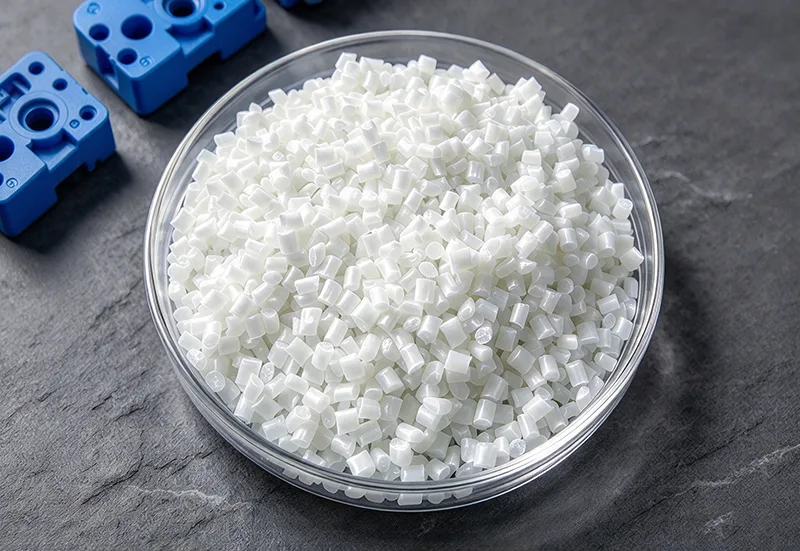
| Physical Form | Pellets |
| MFR | 1.5–30 g/10 min, grade-dependent |
| Density | 1.42–1.43 g/cm³ |
| Melting Point | 178–182°C |
| Tensile Strength | 65–70 MPa, typical |
| Flexural Modulus | 2,800–3,200 MPa, typical |
| Notched Izod Impact at 23°C | 6–8 kJ/m², typical |
| Heat Deflection Temperature at 1.82 MPa | 95–110°C, typical |
| Reference Service Temperature in Air | -40°C to 90°C |
| Mold Shrinkage | 1.8–2.5% |
| Flammability | UL94 HB, grade-specific reference |
| Appearance | Natural White or Black Pellets |
| Processing | Injection Molding |
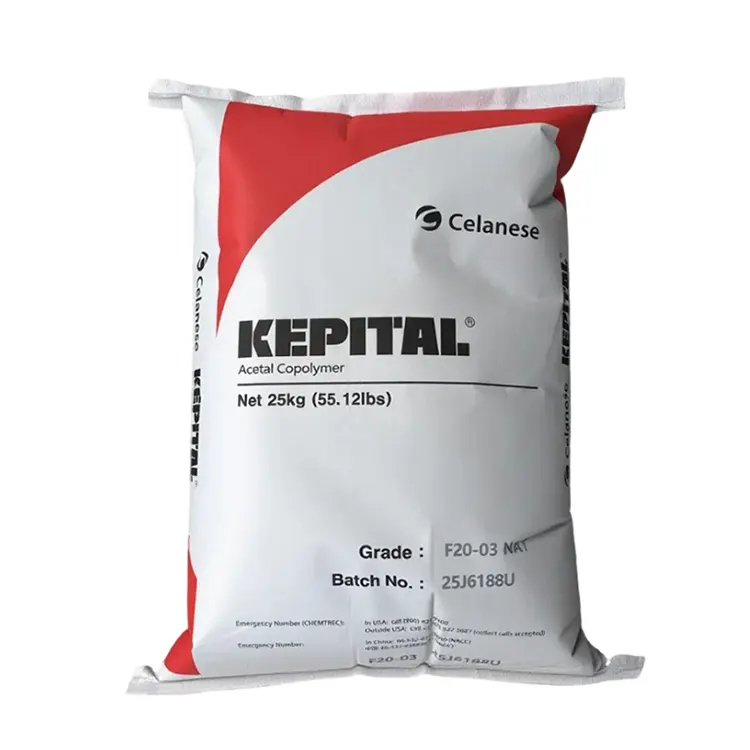
| Packaging | 25 kg Moisture-Protected Woven Bag |
| Documentation | TDS, COA, SDS and Applicable Mechanical Test Reports |
The reference processing range is approximately 190–210°C. POM-H Homopolymer can degrade when overheated or held in the barrel too long. The supplied source warns that excessive temperatures, particularly above about 220°C, can accelerate decomposition and formaldehyde release.
Suitable residence time, temperature control, ventilation and material-change procedures are essential. Follow the manufacturer's safety instructions; do not use generic engineering-plastic processing settings.
Although the resin absorbs little moisture, condensation can create surface defects. The source provides 80°C for 2–4 hours as a conditional drying reference for exposed material.
For thick sections, evaluate holding pressure and cooling to reduce sink marks and centerline porosity. Avoid excessive regrind because repeated thermal processing can reduce mechanical consistency.
The reference material cautions against prolonged hot-water contact above approximately 60°C for homopolymer acetal. Where hot water, alkaline cleaners or other aggressive fluid exposure is central to the application, an appropriate POM-C grade or another compatible polymer should be evaluated.
Acetal homopolymer should not be described as resistant to every acid, alkali or oxidizing agent. Mechanical advantages do not remove chemical-service limitations.
To compare two grades, mold trial gears or moving components using controlled process conditions. Record dimensions after stabilization, assembly fit, wear behavior and cyclic mechanical performance under representative loads.
When purchasing POM-H Homopolymer, buyers should provide Zhongwang with the component type, MFR preference, duty cycle, mechanical load, operating temperature, working medium and purchase quantity.
Grade-specific TDS and COA documentation should accompany commercial material qualification.
Its high crystallinity contributes to useful stiffness and strength, while its sliding and fatigue-related properties make selected grades relevant to gears and moving parts.
No. Gear life also depends on tooth geometry, contact pressure, fatigue, frictional heating, lubrication and the mating material.
Shrinkage and continued dimensional stabilization can affect dimensions after ejection. Mold design, holding pressure, cooling and inspection timing must be controlled.
The supplied reference cautions against sustained hot-water service above approximately 60°C. POM-C is generally a more relevant starting point for such applications, subject to testing.
Thermal degradation can generate formaldehyde. Excessive temperature, prolonged residence time and contamination should be investigated using the selected material's safety and processing guidance.
Address
Building 1, China Plastics International Business Center, No. 285 Shunda West Road, Yuyao City, Ningbo City, Zhejiang Province, China
Tel
If you have any enquiry about quotation or cooperation, please feel free to email us or use the following inquiry form.Our sales representative will contact you within 24 hours. Thank you for your interest in our products.