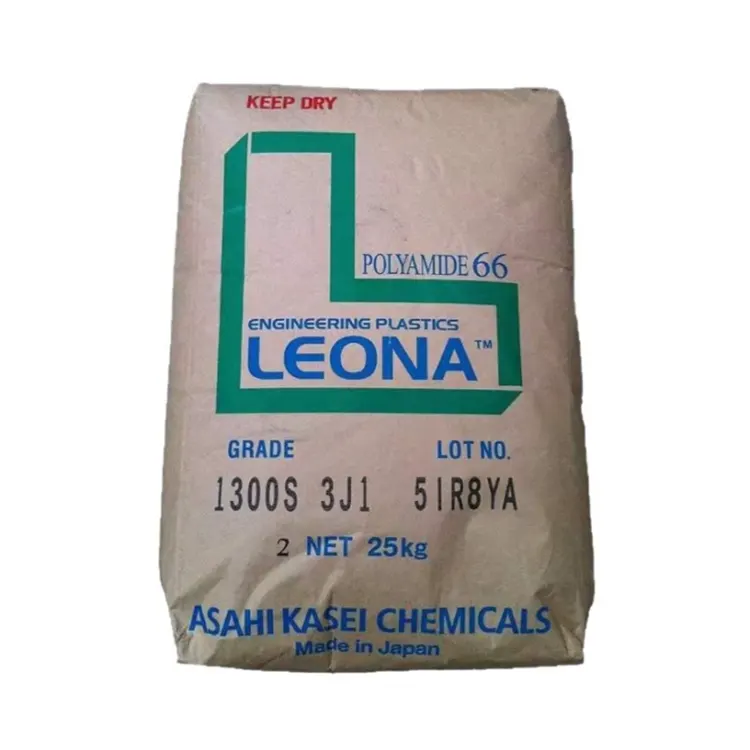
A request for Carbon-Fiber-Reinforced Nylon usually begins with a structural target, and Zhongwang assists OEM purchasers in evaluating which nylon matrix and reinforcement level can meet the intended mechanical and weight requirements.
Carbon fiber reinforcement can increase the stiffness of polyamide and change its response to deformation under load.
The material may be based on PA6, PA66 or another suitable nylon formulation. These matrices differ in moisture response, processing behavior, thermal characteristics and mechanical performance.
Consequently, the name identifies a family of reinforced thermoplastics rather than a single standardized resin.
Carbon fibers can also influence electrical characteristics. Depending on fiber content and connectivity within the polymer, certain compounds may exhibit electrostatic-dissipative or electrically conductive behavior.
This makes electrical qualification important wherever the molded component is near sensitive electronics or expected to provide electrical insulation.
For lightweight engineering parts, the relevant question is not simply whether the reinforced resin is stronger than unfilled nylon.
Designers should evaluate the stiffness and strength achievable at an acceptable component mass, together with the geometry needed to resist the expected loading.
Carbon fiber can provide a favorable reinforcement effect for stiffness-sensitive components, but finished-part performance depends on fiber content, fiber length, orientation and the nylon matrix.
Moving machinery can benefit from structural components that provide sufficient stiffness without unnecessary mass.
Lightweight brackets, mounting structures and selected housings may be evaluated using carbon-fiber-filled polyamide.
Relevant performance requirements include bending stiffness, dimensional stability, vibration, fastening strength and repeated mechanical loading.
Automotive brackets, covers and internal structural parts may require a combination of stiffness, weight control and thermal performance.
The material should be evaluated against the component's operating temperature, mechanical loads, moisture exposure and assembly requirements.
Equipment housings and supports with tight tolerances can be sensitive to shrinkage and thermal expansion.
Reinforcement may improve certain dimensional characteristics, but anisotropic behavior must be considered during both material selection and mold design.
Unfilled nylon is commonly used as an electrical insulating material. Adding carbon fibers can alter the electrical behavior of the resulting compound.
Some reinforced grades may exhibit increased conductivity or electrostatic dissipation, while others may not meet a defined electrical classification.
The actual result depends on the fiber formulation, loading level, distribution and processing history.
For a component located near electrical circuits, buyers should confirm surface or volume resistivity and any relevant electrical requirements before approving a material substitution.
Conductive or dissipative performance should not be inferred solely from the presence of carbon fiber.
During injection molding, reinforcing fibers may align with the direction of polymer flow.
As a result, mechanical stiffness, strength, shrinkage and thermal expansion can differ between directions in the finished component.
A laboratory tensile result measured in one orientation may not represent the performance of a complicated molded bracket under a different load direction.
Gate location, flow path, wall thickness and fiber distribution should therefore be considered when evaluating critical structural applications.
| Item | Reference Specification |
|---|---|
| Product Name | Carbon-Fiber-Reinforced Nylon |
| Brand | Zhongwang |
| Matrix Material | Nylon / Polyamide, Grade-Dependent |
| Reinforcement | Carbon Fiber |
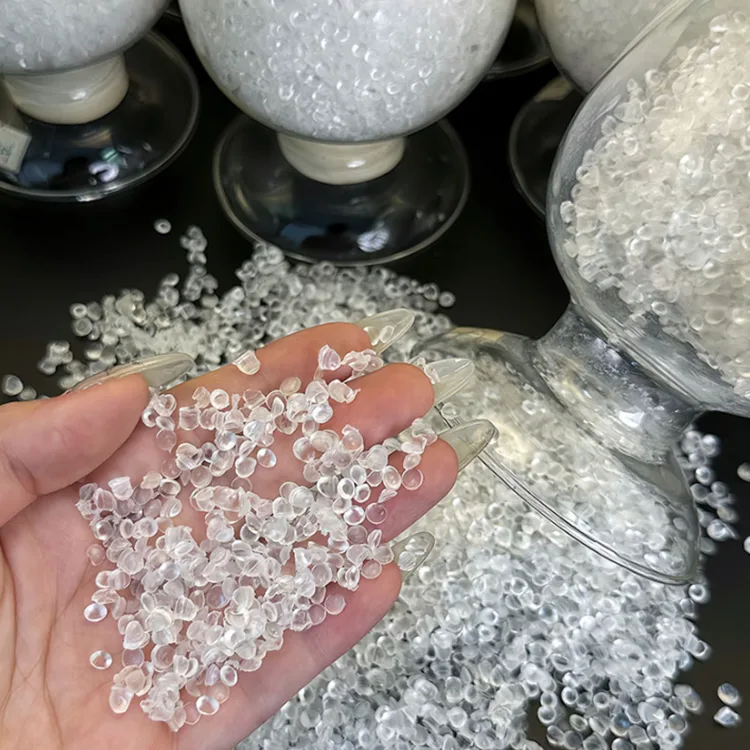
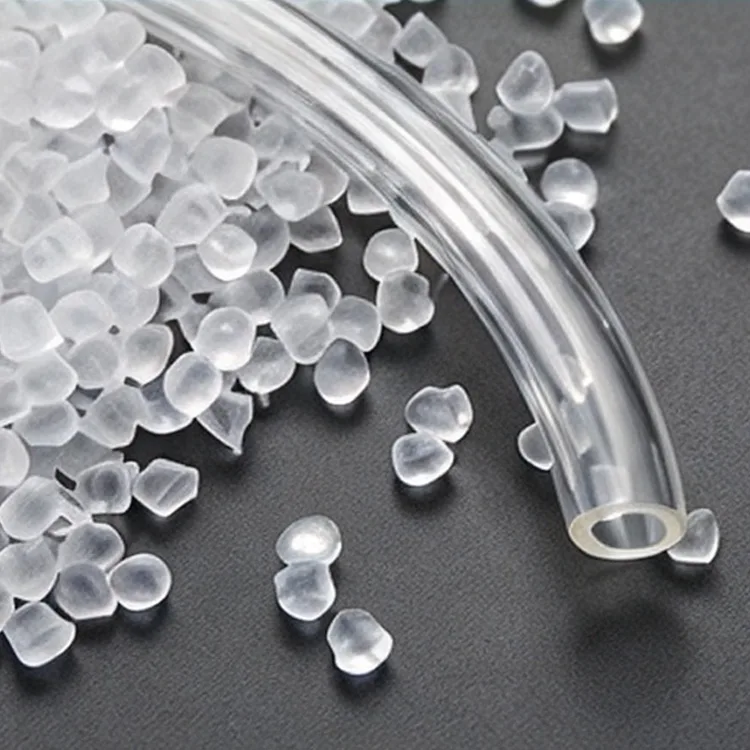
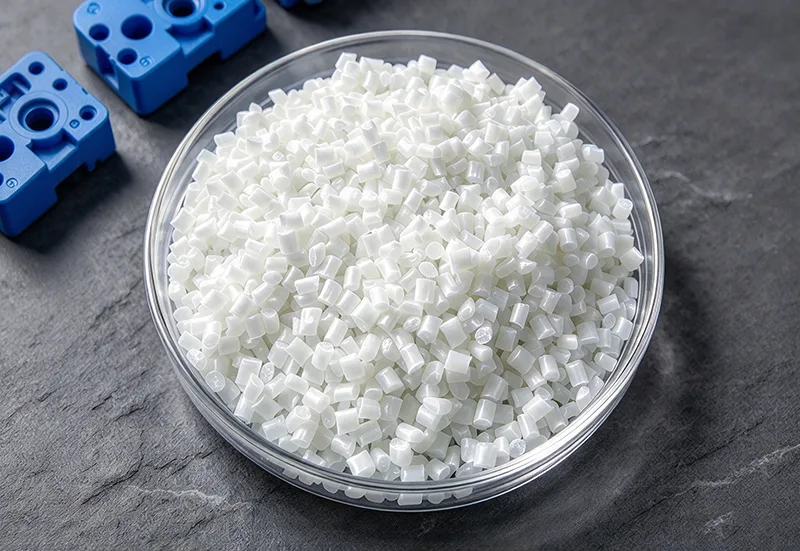
| Material Form | Pellets |
| Carbon Fiber Content | Grade-dependent |
| Melt Flow | Grade-dependent |
| Density | Grade-dependent |
| Tensile Strength | Grade- and orientation-dependent |
| Flexural Modulus | Grade-dependent |
| Impact Strength | Grade-dependent |
| Heat Resistance | Grade-dependent |
| Dimensional Stability | Grade- and orientation-dependent |
| Electrical Properties | Grade- and formulation-dependent |
| Molding Shrinkage | Grade- and processing-dependent |
| Processing | Injection Molding and Applicable Thermoplastic Processing |
| Appearance | Usually Black or Grade-Dependent Color |
| Packaging | Standard Resin Packaging |
| Documents | TDS, COA and Applicable Product Documentation |
The nylon matrix can absorb moisture. Excess moisture during melt processing may contribute to degradation and changes in molded-part quality.
Drying and storage procedures should follow the selected grade's technical recommendations.
Excessive mechanical shear during processing can influence fiber length and distribution.
Appropriate screw configuration, melt temperature and injection conditions should be selected to maintain stable processing without unnecessary fiber damage.
Flow direction can influence fiber orientation and the resulting mechanical behavior.
Mold design should account for the directions of expected structural loading and critical dimensional tolerances.
Reinforced grades can show fiber-related surface effects. Abrasive fillers may also increase tooling wear.
Surface requirements and equipment suitability should be considered before trial production.
| Selection Factor | Carbon Fiber Reinforcement | Glass Fiber Reinforcement |
|---|---|---|
| Stiffness-to-Weight Design | Often a major selection reason | Can also provide useful reinforcement |
| Electrical Characteristics | May introduce conductivity | Generally more compatible with insulating applications |
| Material Cost | Often higher | Often more economical |
| Directional Properties | Important | Important |
| Surface Appearance | Fiber-related effects possible | Fiber-related effects possible |
| Typical Design Priority | Weight-sensitive stiffness and functional performance | General structural reinforcement and cost balance |
Zhejiang Zhongwang International Trade Co., Ltd. coordinates sourcing for reinforced engineering plastics within the Yuyao China Plastics City supply network.
Buyers evaluating Carbon-Fiber-Reinforced Nylon should provide the preferred nylon matrix, carbon fiber content where specified, mechanical loading direction, weight target, dimensional tolerances, operating temperature and electrical requirements.
Component drawings and existing material specifications can support grade comparison. Final approval should include representative molding trials and mechanical or electrical testing as required.
Not necessarily. Carbon fiber reinforcement can increase compound density relative to the unfilled matrix. A weight advantage may come from achieving the required stiffness with a redesigned, lighter component rather than from the compound having lower density.
Yes, certain formulations can exhibit conductivity or electrostatic dissipation. The result depends on the fiber system and compound design. Electrical properties must be confirmed for the selected grade.
Fiber alignment can cause different strength and stiffness values in different directions. The molded part should be evaluated under its actual loading conditions.
No. The preferred material depends on stiffness, weight, electrical requirements, cost, mechanical behavior and processing constraints.
Relevant details include the nylon matrix, reinforcement requirement, component geometry, weight target, load conditions, electrical performance, processing method and expected order volume.
Address
Building 1, China Plastics International Business Center, No. 285 Shunda West Road, Yuyao City, Ningbo City, Zhejiang Province, China
Tel
If you have any enquiry about quotation or cooperation, please feel free to email us or use the following inquiry form.Our sales representative will contact you within 24 hours. Thank you for your interest in our products.