For manufacturers sourcing Glass-Fiber-Reinforced Nylon to improve structural stiffness and dimensional consistency, Zhongwang helps compare reinforcement requirements against the moisture-related characteristics of the chosen polyamide matrix.
Nylon is a family of polyamide polymers used in engineering applications. Common matrix options include PA6 and PA66, both of which can be compounded with glass fibers to alter mechanical performance.
Glass fiber reinforcement generally increases stiffness and resistance to deformation. It can also reduce molding shrinkage in certain directions.
Nevertheless, reinforcing nylon does not eliminate the effects of moisture absorption. Water can enter the polyamide matrix and change its dimensions and mechanical properties.
For components operating in humid environments, the critical question is whether the part maintains acceptable function after it reaches the relevant moisture condition.
Mechanical properties measured on dry polyamide specimens may differ from those measured after moisture conditioning.
Absorbed moisture acts as a plasticizing influence within the nylon matrix. Depending on the material and conditions, it can change stiffness, toughness, dimensions and other mechanical behavior.
This distinction matters for structural brackets, housings and assemblies that must retain dimensional accuracy during service.
Reinforcement can reduce some dimensional variation, but moisture absorption remains a material characteristic of the polyamide matrix.
For tight-tolerance components, buyers should consider dimensional measurements after defined conditioning as well as immediately after molding.
Stiffness and other mechanical characteristics may change as nylon absorbs water.
Where a component must resist structural loads throughout service, conditioned property data may be more relevant than dry-as-molded values alone.
The nylon matrix affects thermal behavior, processing characteristics, mechanical performance and moisture response.
PA6 and PA66 should therefore be compared as specific reinforced grades rather than assumed to have identical properties at the same fiber content.
Brackets and supports in automotive assemblies may encounter sustained loading, vibration, temperature changes and environmental exposure.
Reinforced nylon can provide additional stiffness, but the component should be evaluated for fatigue, fastening strength and dimensional stability.
Appliance housings, internal supports and mounting components may require resistance to deformation during assembly and use.
Material selection should consider loading direction, temperature, humidity and the need to maintain component fit.
Industrial housings, equipment supports and selected mechanical parts may benefit from increased rigidity.
Impact requirements and local stress concentrations should also be considered because reinforcement changes the overall balance of properties.
Suitable grades can be evaluated for electrical components requiring structural rigidity and dimensional accuracy.
The relevant electrical and flame-retardant requirements must be established for the specific formulation.
| Item | Reference Specification |
|---|---|
| Product Name | Glass-Fiber-Reinforced Nylon |
| Brand | Zhongwang |
| Matrix Material | Polyamide / Nylon, Including Applicable PA6 or PA66 Grades |
| Reinforcement | Glass Fiber |
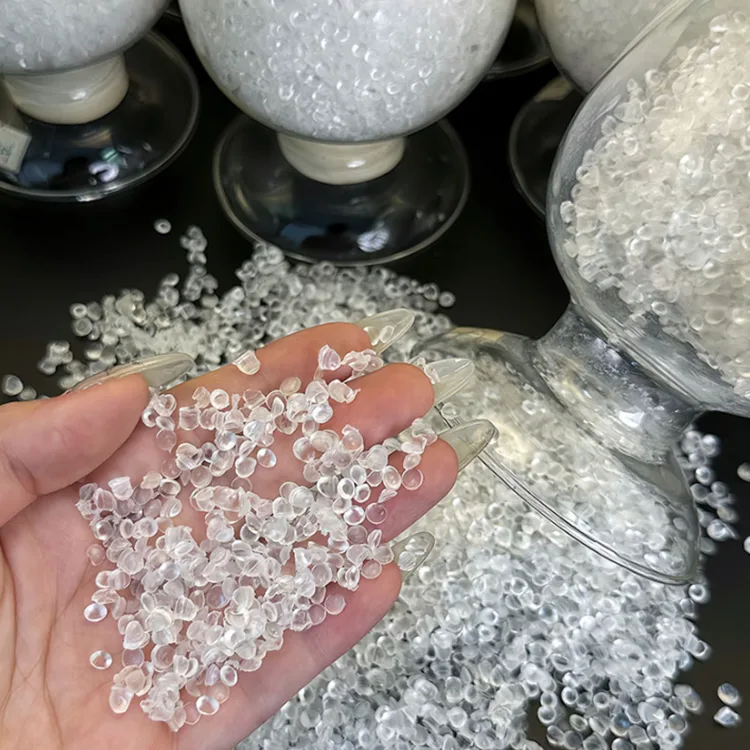
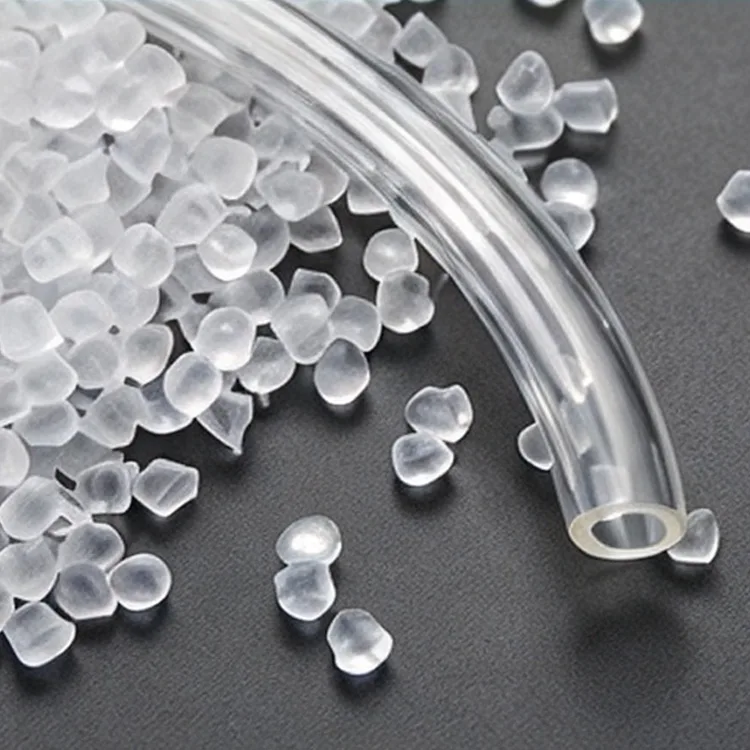
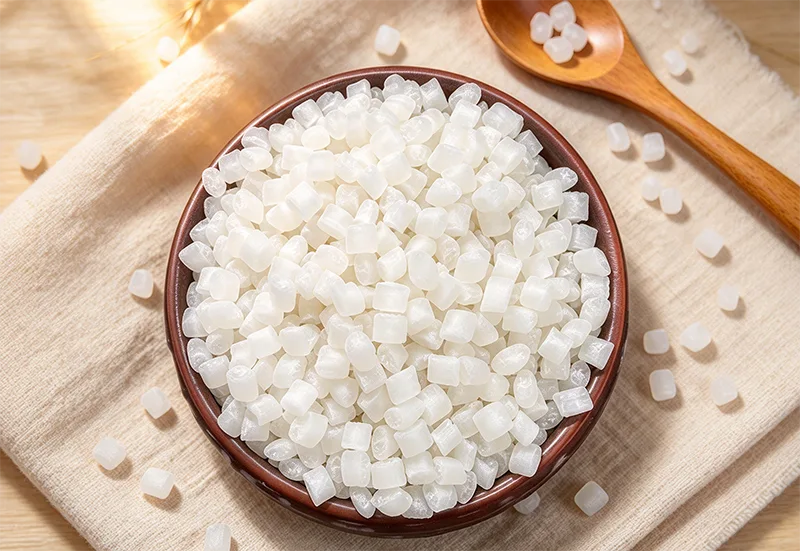
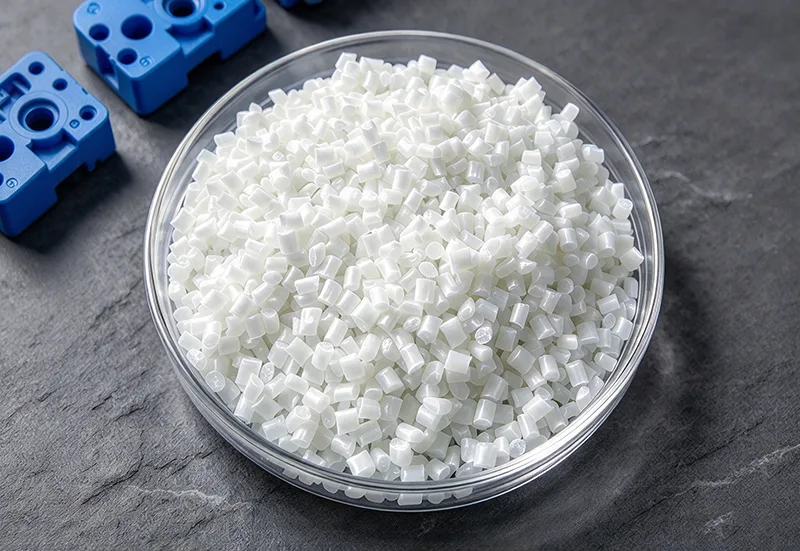
| Physical Form | Pellets |
| Glass Fiber Content | Grade-dependent |
| Melt Flow | Grade-dependent |
| Density | Grade-dependent |
| Tensile Strength | Grade- and condition-dependent |
| Flexural Modulus | Grade- and condition-dependent |
| Impact Strength | Grade- and condition-dependent |
| Heat Resistance | Grade-dependent |
| Moisture Absorption | Matrix- and exposure-dependent |
| Dimensional Stability | Grade-, orientation- and moisture-dependent |
| Molding Shrinkage | Grade- and processing-dependent |
| Processing | Injection Molding and Applicable Thermoplastic Processing |
| Appearance | Natural or Grade-Dependent Color |
| Packaging | Standard Resin Packaging |
| Documents | TDS, COA and Applicable Product Documentation |
During mold filling, glass fibers tend to align with the direction of molten polymer flow.
This alignment can produce different mechanical and shrinkage behavior in the flow and transverse directions.
For components requiring tight tolerances, material selection should be coordinated with gate placement, runner design and the expected loading direction.
Fiber orientation and moisture-related dimensional changes are separate effects and should both be considered in part qualification.
Nylon absorbs moisture and should be conditioned appropriately before melt processing.
Excessive moisture during molding may promote degradation and reduce material consistency.
Drying conditions must follow the selected PA grade's technical recommendations.
Fiber orientation, cooling, part geometry and the nylon matrix affect dimensional behavior.
Uneven wall thickness and unsuitable gate positioning may contribute to warpage.
Where humidity is relevant to service, finished parts should be evaluated after representative moisture conditioning.
Structural performance should be assessed using the environmental conditions expected during use.
Visible fiber marks, dimensional variation or inconsistent part strength may indicate processing or mold-design issues.
Process control should include suitable material preparation, temperature settings, cooling and incoming resin verification.
| Property | Glass Fiber Reinforced Grades | Unfilled Grades |
|---|---|---|
| Rigidity | Generally higher | Lower in comparable matrix grades |
| Load Deformation | Often reduced | More matrix-dependent |
| Shrinkage | Often reduced but directional | Generally more uniform |
| Moisture Effects | Remain relevant | Remain relevant |
| Impact Properties | Grade-dependent | Grade-dependent |
| Surface Finish | Fiber-related texture possible | Often smoother |
Zhongwang operates in Yuyao China Plastics City and coordinates sourcing of reinforced engineering plastic materials for industrial processors.
Manufacturers purchasing Glass-Fiber-Reinforced Nylon should identify the required nylon matrix, glass fiber level, expected humidity, operating temperature, mechanical loads and dimensional tolerances.
The applicable grade should be reviewed against its TDS and COA. Where moisture affects the finished product, conditioned component testing should be included before bulk approval.
Yes. Glass fibers do not eliminate the moisture absorption of the polyamide matrix. Moisture may change dimensions and mechanical behavior, depending on the grade and exposure conditions.
Yes. Glass fiber often reduces shrinkage, but fiber orientation can create different shrinkage values in different directions. Mold design and processing conditions remain important.
Where humidity is relevant to the intended application, conditioned testing helps assess the actual dimensional and mechanical behavior expected during service.
Neither matrix is universally better. Their thermal, moisture-related, mechanical and processing properties differ. The appropriate choice depends on the selected compound and finished-part requirements.
Buyers should provide the nylon matrix, required reinforcement percentage or target properties, mechanical loading, temperature, humidity exposure, processing method and component tolerances.
Address
Building 1, China Plastics International Business Center, No. 285 Shunda West Road, Yuyao City, Ningbo City, Zhejiang Province, China
Tel
If you have any enquiry about quotation or cooperation, please feel free to email us or use the following inquiry form.Our sales representative will contact you within 24 hours. Thank you for your interest in our products.