Manufacturers looking to source Medium-VA EVA through Zhongwang can select resin grades according to the mechanical and processing requirements of foam, film, and adhesive production.
The material is an ethylene-vinyl acetate copolymer containing approximately 15–28 wt% vinyl acetate. Its properties fall between lower-VA grades with more polyethylene-like characteristics and higher-VA grades that are softer and more polar.
The ethylene segments contribute structural strength and dimensional stability, while vinyl acetate reduces crystallinity and increases flexibility.
This combination is useful in applications where a product must bend or absorb deformation without losing the melt strength required during manufacturing.
Because the material serves several different industries, the most important technical indicators vary by product. Foam manufacturers focus on expansion and cell stability, film producers focus on melt behavior and sealing, while adhesive manufacturers evaluate viscosity and bonding performance.
EVA foam is widely used where cushioning, low weight, and flexibility are required.
The supplied reference identifies foaming grades containing approximately 15–22 wt% VA with MFR values of 1.5–6 g/10 min.
These grades can be considered for shoe midsoles, exercise mats, protective foam packaging, and other cushioning products.
During foaming, gas generation and polymer melt strength must be balanced to allow the material to expand while maintaining the intended cell structure.
Insufficient melt strength may lead to unstable cell growth or collapse. Excessive viscosity can interfere with expansion and mold filling.
The appropriate grade should therefore be evaluated with the selected blowing agent, crosslinking system where applicable, production equipment, and intended foam density.
Foam products may shrink or deform if cooling is insufficient or the process is not properly controlled.
Mold temperature, cooling duration, expansion conditions, and formulation composition influence the final dimensions.
For footwear components, manufacturers should also evaluate compression behavior, resilience, and dimensional consistency after conditioning.
Medium-VA EVA can also be used in selected film applications where flexibility and sealing behavior are important.
The supplied film-grade category covers approximately 15–20 wt% VA with MFR values of 2–12 g/10 min.
These materials are relevant to flexible packaging layers, selected agricultural films, and compatible multilayer film structures.
EVA can be incorporated into packaging structures to modify heat-sealing characteristics.
Seal initiation behavior, seal strength, film thickness, and compatibility with neighboring layers should be checked using the finished film construction.
VA content is one factor influencing thermal behavior, but it does not determine sealing performance independently of the formulation and production conditions.
In blown-film or cast-film production, MFR affects how the polymer flows through the extrusion equipment.
A grade with unsuitable melt behavior may contribute to thickness variation, film instability, or processing difficulties.
Resin selection should account for the extrusion method, target thickness, line speed, cooling conditions, and any additional blend components.
Agricultural and other outdoor films may require additional UV stabilization.
Packaging intended for direct food contact must use an appropriate grade and complete formulation that satisfy the applicable food-contact requirements.
Neither weathering resistance nor food-contact compliance should be assumed from the VA percentage alone.
Selected grades within the medium-VA range are used in hot-melt adhesive formulations for packaging, labels, bookbinding, and hygiene-related applications.
The original source identifies adhesive grades containing approximately 18–28 wt% VA with MFR values of 15–150 g/10 min.
These resins can be blended with compatible tackifiers, waxes, and antioxidants to develop the intended flow and bonding characteristics.
Unlike foam production, where sufficient melt strength is important, adhesive formulation may require greater melt flow for mixing and application.
The complete adhesive should be tested for application viscosity, setting behavior, cohesive strength, and adhesion to the intended substrates.
| Item | Reference Specification |
|---|---|
| Product Name | Medium-VA EVA |
| Brand | Zhongwang |
| Polymer | Ethylene-Vinyl Acetate Copolymer |
| Vinyl Acetate Content | 15–28 wt%, grade-dependent |
| Melt Flow Rate | 1.5–150 g/10 min (190°C/2.16 kg) |
| Density | 0.930–0.955 g/cm³ |
| Melting Point | 65–88°C, reference range |
| Tensile Strength | 12–22 MPa, typical |
| Elongation at Break | 600–800%, typical |
| Vicat Softening Temperature | 50–65°C, typical |
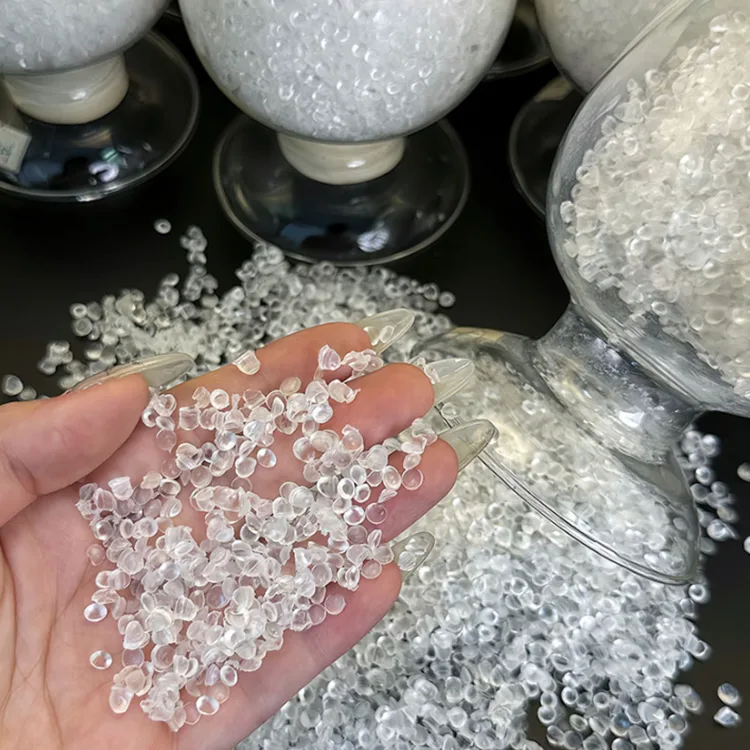
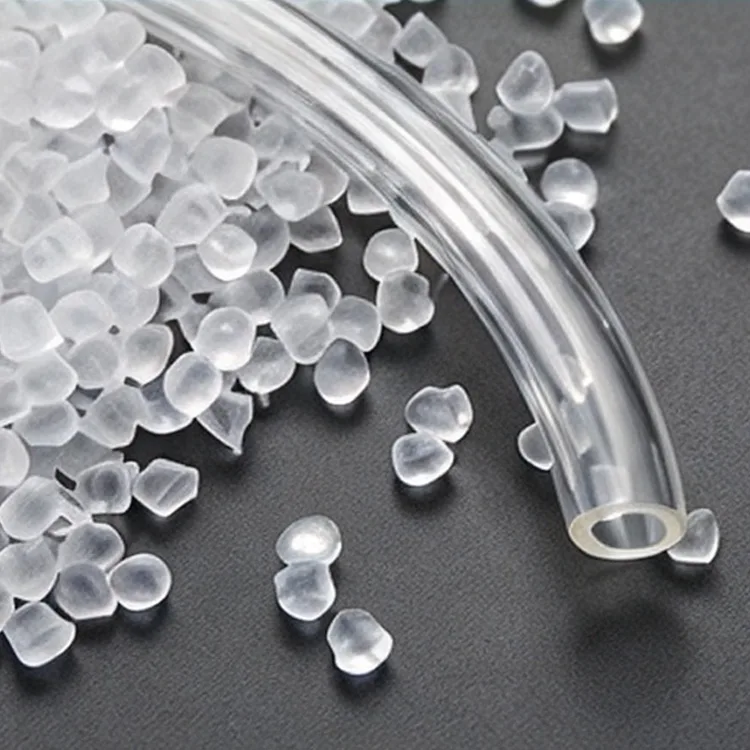
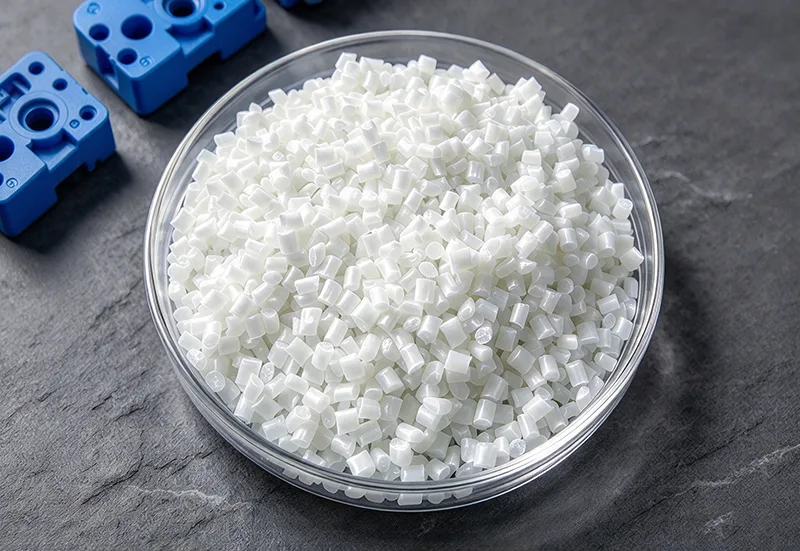
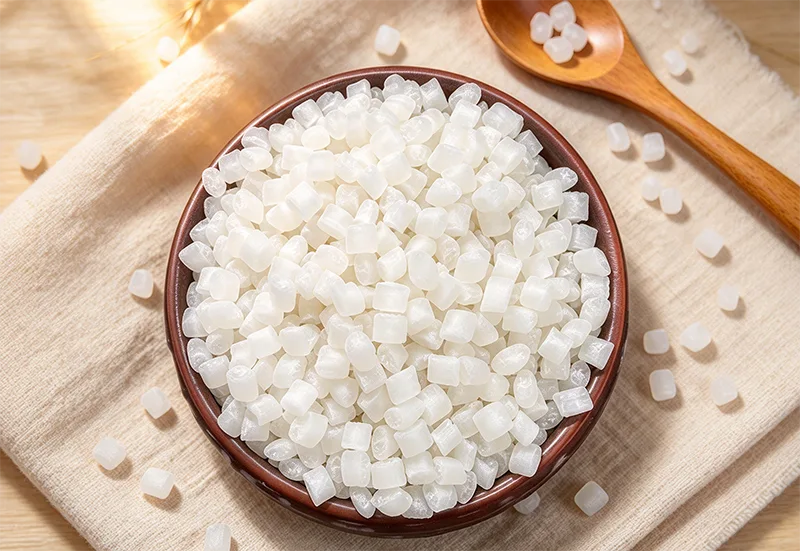
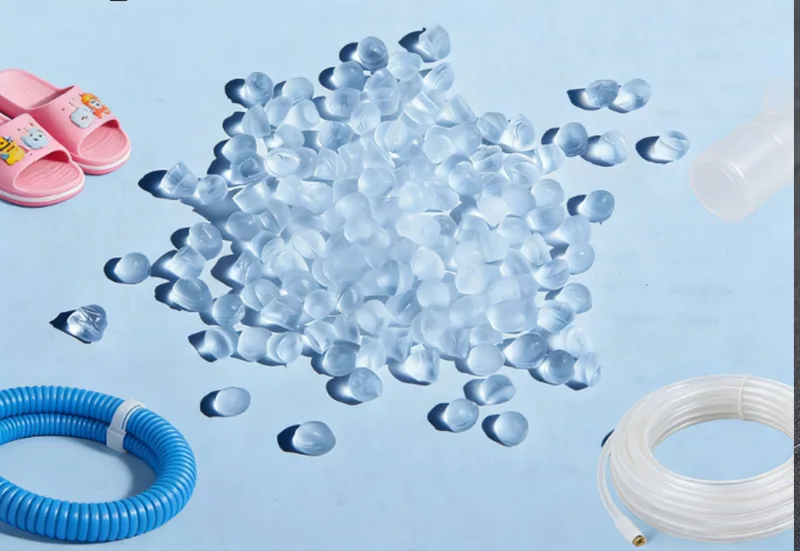
| Appearance | Translucent or Milky-White Pellets |
| Processing Methods | Foaming, Blown Film, Cast Film, Extrusion Coating, Cable Extrusion, Injection Molding |
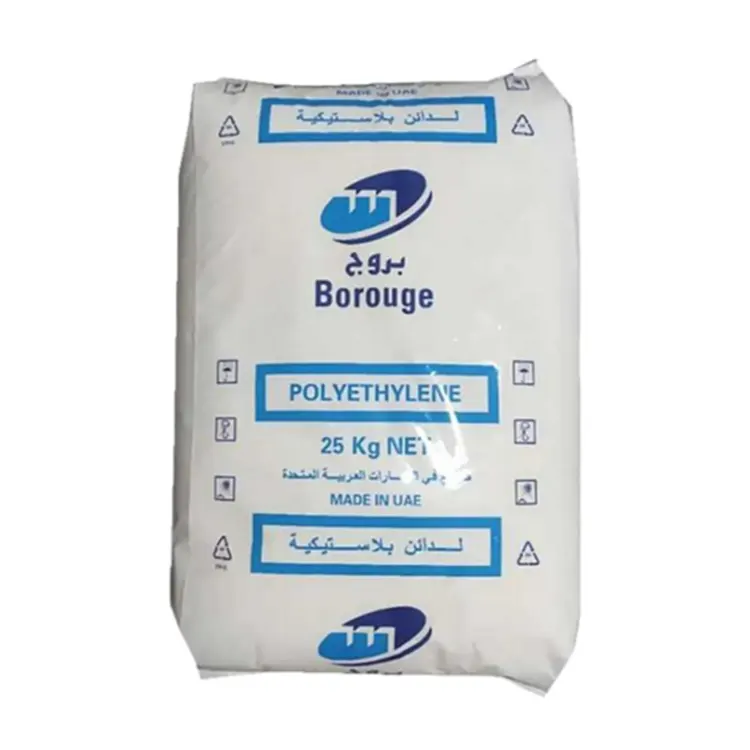
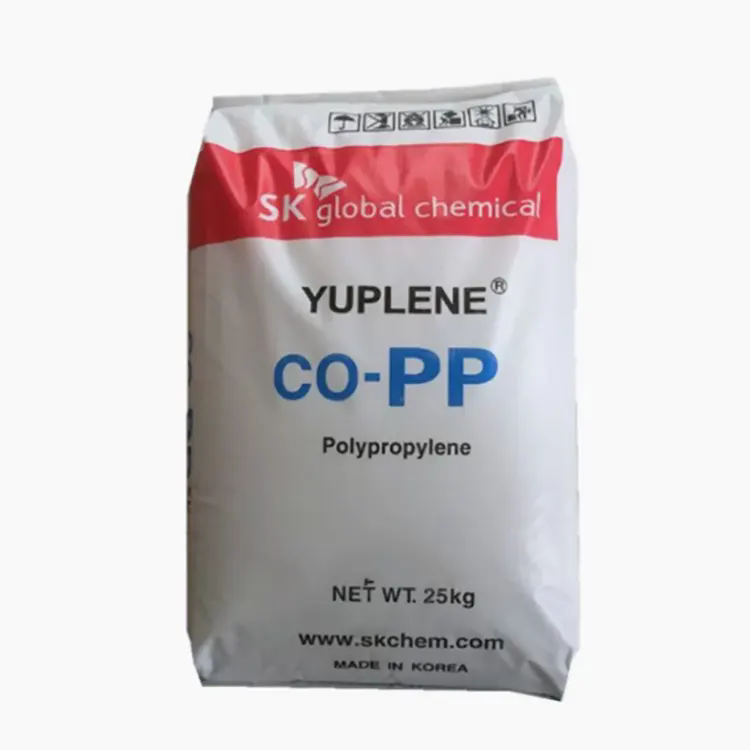
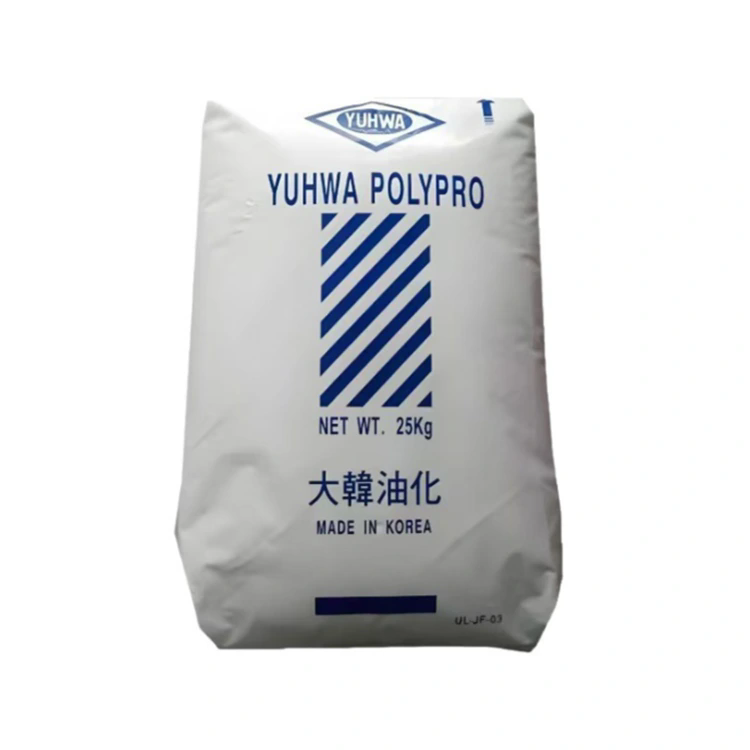
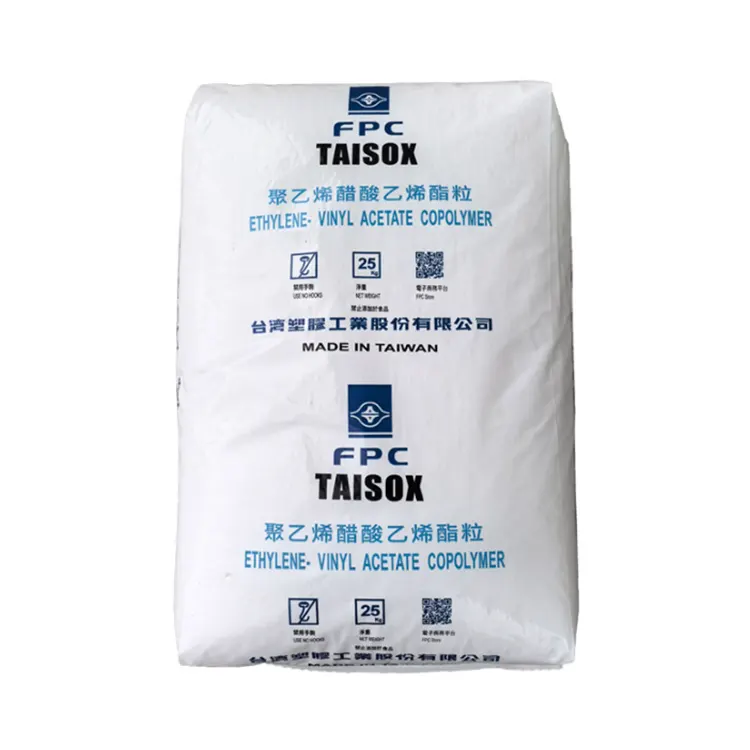
| Packaging | 25 kg Moisture-Protected Woven Bag |
| Technical Documents | TDS, COA, SDS and Applicable Physical Test Reports |
| Manufacturing Route | Reference MFR | Main Processing Consideration |
|---|---|---|
| Foaming | 1.5–6 g/10 min | Melt strength, expansion stability, foam cell structure |
| Film Extrusion | 2–12 g/10 min | Extrusion stability, thickness control, sealing behavior |
| Hot-Melt Adhesive | 15–150 g/10 min | Mixing behavior, application viscosity, bonding formulation |
Poor foam structure may result from an unsuitable resin MFR, blowing-agent system, processing conditions, or insufficient cooling.
Manufacturers should review expansion ratio, cell structure, mold temperature, and dimensional changes after molding.
In film production, unstable extrusion, contamination, or unsuitable cooling may create surface defects and inconsistent thickness.
The resin grade should be assessed together with the extrusion process and the full film formulation.
The supplied technical reference recommends barrel temperatures of approximately 130–180°C and cautions against prolonged thermal exposure above 200°C.
Excessive temperature or residence time can cause degradation, odor, discoloration, and changes in material performance.
Processing settings should follow the selected grade's recommendations.
Unstabilized EVA may experience changes in color and mechanical properties during extended UV exposure.
Outdoor film or cable applications should therefore consider UV-stabilized formulations and representative weathering tests.
Zhejiang Zhongwang International Trade Co., Ltd. is located in Yuyao China Plastics City, where established petrochemical supplier relationships and logistics resources support industrial resin procurement.
When sourcing Medium-VA EVA, buyers should identify the intended application before specifying the grade. For foaming, useful requirements include target density, expansion ratio, hardness, and processing method. For films, important details include thickness, sealing requirements, and extrusion conditions.
Adhesive manufacturers should provide their target VA content, melt flow, formulation ingredients, and bonding application.
The relevant material specifications can be confirmed through the selected grade's TDS and COA. Laboratory and pilot production trials are recommended before bulk orders.
The material offers a combination of flexibility and melt strength that can be suitable for selected foam formulations. The final cushioning and expansion performance depends on VA content, MFR, blowing agent, crosslinking system, and processing conditions.
An adhesive-oriented grade may have a much higher MFR and insufficient melt strength for the intended foaming process. This can make stable cell formation more difficult. The suitability of any grade must be tested with the actual formulation.
Selected grades can be evaluated as components of flexible packaging films. Direct food-contact applications require grade-specific compliance documentation and evaluation of the complete film structure under the intended contact conditions.
Increasing vinyl acetate content generally reduces polymer crystallinity and increases softness. However, finished-product flexibility is also influenced by molecular weight, formulation, processing, and product geometry.
Useful details include target VA percentage, MFR, foam density, hardness, expansion ratio, manufacturing process, required quantity, and any existing material grade used for comparison.
Address
Building 1, China Plastics International Business Center, No. 285 Shunda West Road, Yuyao City, Ningbo City, Zhejiang Province, China
Tel
If you have any enquiry about quotation or cooperation, please feel free to email us or use the following inquiry form.Our sales representative will contact you within 24 hours. Thank you for your interest in our products.